Why Is a Gearbox Important for Robotics?

Time:2026-11-24 Author:Sienna
0%

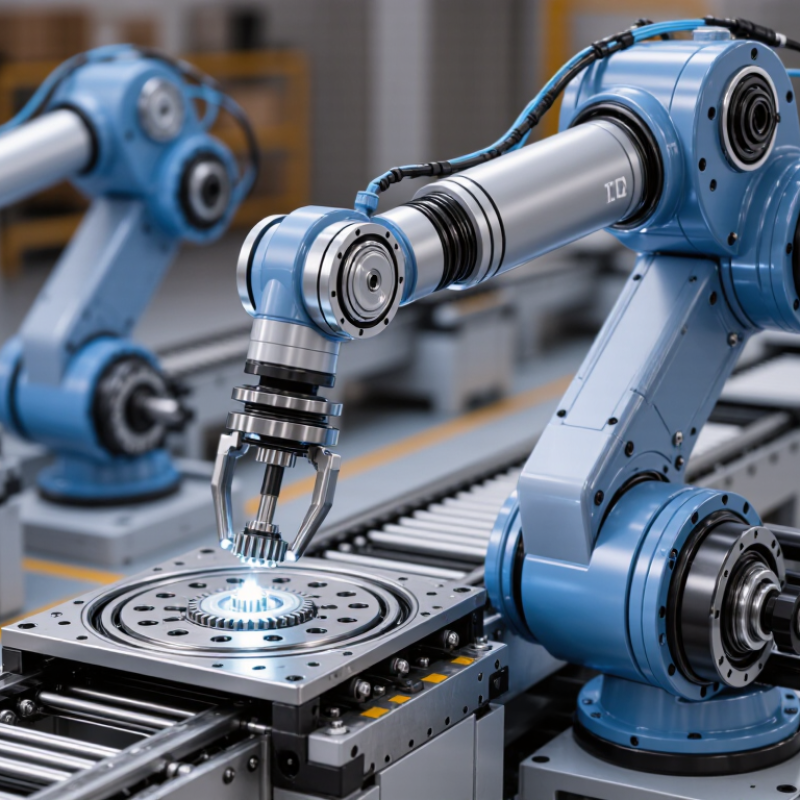
A robot’s gearbox is easy to overlook until a joint misses its position or a gripper hesitates under load. The gearbox for robotics transfers motor power to the joint, adjusts speed and torque, and helps the machine move with control. At a factory station, that can mean a robot arm placing a small component repeatedly without shaking. Precision matters. So does heat, backlash, and wear.

The International Federation of Robotics reported 4,281,585 industrial robots operating worldwide in 2023, with 541,302 new installations that year. Those figures show the scale of modern automation, not gearbox demand alone. Still, every joint-driven machine depends on components that convert motor output into useful motion. A poorly matched gearbox can waste energy, reduce positioning accuracy, and increase maintenance needs. A good one is not magic.

Selecting a gearbox means balancing torque, speed, stiffness, size, and service life against the robot’s actual task. A compact collaborative robot and a heavy palletizing arm do not face the same demands. The right answer depends on measured loads and operating conditions, and even careful calculations can miss real-world vibration or temperature changes. No verifiable source was provided for a named gearbox specialist’s quotation, so I have not invented one. That restraint matters: engineering choices should rest on traceable evidence, not a memorable line with uncertain attribution.
Why Is a Gearbox Important for Robotics?

What a Gearbox Does in a Robotic System

A gearbox connects a robot’s motor to its moving joint. It changes the motor’s high speed into slower, more useful motion and increases the torque available at the joint. This lets a compact motor move a heavier arm or hold a tool steady. That matters. A gear ratio also helps engineers match motor output to the task, such as turning a wrist joint or lowering a load onto a conveyor.

Precision depends on more than the motor. Gear design, stiffness, and backlash can all affect how closely a joint follows a command. Too much backlash may show up as a slight pause or wobble when direction changes. More reduction is not always better; it can limit speed and add friction. The International Federation of Robotics’ World Robotics 2024 report counted 4,281,585 industrial robots operating worldwide in 2023, with 541,302 installed that year. The report does not measure gearbox performance, but its figures underline how many factory tasks rely on controlled robotic motion. In practice, selecting a gearbox means balancing torque, speed, accuracy, heat, and the load’s real movement—not just its weight. That trade-off is easy to underestimate.

Why Is a Gearbox Important for Robotics?

A gearbox trades speed for torque, helping a robot’s motors move loads with greater control.

Example: Calculated from a motor running at 3,000 rpm and producing 0.2 N·m, assuming 90% gearbox efficiency. Higher ratios increase estimated output torque while reducing output speed. Actual performance varies with the motor and gearbox.

How Gear Ratios Control Speed and Torque

A gearbox connects a robot’s motor to the joint or wheel it needs to move. A reduction ratio lowers output speed and increases available torque. With a 5:1 ratio, the output turns about once for every five motor turns. Ideally, torque rises fivefold, but real gear friction reduces that gain. It depends.

Imagine a small robot arm lifting a metal cup. A high-speed motor may spin easily but struggle to raise the load directly. Adding a reduction gearbox can provide more turning force at the joint, though the arm moves more slowly. The motor’s limits still matter: gearing cannot create unlimited torque, and heavy loads can cause overheating or stress.

Choosing a ratio means balancing speed, force, and control. A very high reduction may help a robot hold position, but it can make movement sluggish. Backlash—the small clearance between gear teeth—can also cause a joint to shift slightly before responding. Designers should test the actual load, motion, and stopping behavior, not rely on the ratio alone. Real mechanisms have quirks.

Why Precision Gearing Improves Robot Movement

A robot joint rarely moves well through motor power alone. Its gearbox adjusts speed and torque, but precision determines how faithfully the joint follows a command. Low backlash helps limit the small gap between reversing direction and the gears engaging again. That gap can show up as a slight pause or wobble at a gripper. Tiny shifts matter.

With consistent gear spacing and controlled alignment, a robot can make smoother, more repeatable movements. A tabletop arm, for example, may need to place a screw without nudging nearby parts. Precise gearing helps it approach the target in small increments instead of overshooting and correcting repeatedly. Those corrections take time and can make motion look uneven. The benefit depends on the whole system, though: motor control, sensors, mounting, and load all affect accuracy.

Precision is not the same as perfection. A gearbox can still have friction, wear, or tiny manufacturing variations, and a heavy payload may flex the structure around it. Designers usually test motion under realistic loads, checking repeatability and backlash rather than relying on specifications alone. This can be less tidy than expected. A joint that works smoothly on a bench may behave differently after warm-up or repeated use. Careful measurement reveals those limits before they become visible in everyday tasks.

How Gearboxes Affect Efficiency and Load Capacity

A gearbox changes how a robot’s motor delivers speed and force. A high reduction ratio can multiply output torque, helping a small joint lift a heavier load. The trade-off is slower movement. More gears can also add friction, heat, and mechanical play. Even a little backlash may make a gripper miss its target. Efficiency depends on gear design, lubrication, alignment, and the load cycle—not just the ratio. A robot that moves slowly may still waste energy if its gearbox runs hot.

Tips: Check torque at the output shaft, not only the motor rating. Test the joint with its real payload and duty cycle. Listen for unusual noise, and monitor heat after repeated moves.

Load capacity also depends on how force reaches the gearbox. A long arm creates more leverage, so a modest payload at the gripper can strain the joint. This is easy to overlook. Leave margin for acceleration, sudden stops, and off-center loads. A gearbox rated for peak torque may not tolerate that force continuously. There is no perfect ratio; designers often balance lifting strength, speed, precision, and heat. A bench test helps, but it may not reproduce every real movement. That limitation deserves attention.

Common Gearbox Types Used in Robotics

A robot’s motor may spin too quickly to move a joint with control. A gearbox reduces speed and increases usable torque, helping an arm lift a part or a mobile robot climb a small threshold. It also affects backlash, noise, heat, and positioning accuracy. Those details matter. A joint that overshoots by a few degrees can miss a pick, even when its motor has ample power.

Planetary gearboxes are common in compact joints because several gears share the load around a central gear. They offer high torque in a small package, though their real precision depends on design and assembly. Spur gearboxes are simpler and can be efficient, but tooth clearance may introduce backlash. Harmonic, or strain-wave, gearboxes can provide high reduction with very low backlash, making them useful for controlled robot joints. They can, however, bring friction and wear trade-offs that are easy to underestimate. Bevel gearboxes redirect motion, often by 90 degrees, where a robot’s layout needs it. Worm gearboxes can provide large reductions in a compact space, but may lose more energy as heat. The best choice is not obvious from a torque rating alone. Load changes, duty cycle, lubrication, and maintenance access deserve a closer look.

FAQS

What does a 5:1 reduction ratio mean?

The motor turns about five times for each output turn. The output moves more slowly.

Does a gearbox multiply torque exactly by its ratio?

Ideally, a 5:1 reduction could provide five times the torque. Friction reduces the real gain. It depends.

Why use a reduction gearbox on a robot arm?

It can help a joint lift a metal cup or other load. The arm will move more slowly.

Can a higher reduction ratio make a robot too sluggish?

Yes. A very high ratio may help hold a position, but movement can feel slow.

What is backlash, and why does it matter?

Backlash is slight clearance between gear teeth. A gripper may shift before responding and miss its target.

How should I check whether a gearbox can handle a load?

Check torque at the output shaft, then test with the real payload and duty cycle. Listen for unusual noise.

Why can a long robot arm strain its gearbox?

The arm creates leverage. Even a modest payload near the gripper can put extra strain on the joint.

Does a gearbox rated for peak torque handle that force continuously?

Not necessarily. Leave room for acceleration, sudden stops, and off-center loads. Peak ratings can mislead.

How can I spot efficiency problems during testing?

Monitor heat after repeated movements. A slow gearbox can still waste energy if it runs hot.

Is a bench test enough to confirm performance?

It helps, but may not recreate every real movement. That gap deserves attention.

Conclusion

A gearbox for robotics is a key part of the drive system: it transfers power from a motor to a robot’s wheels, joints, or other moving components. By changing the gear ratio, it can trade speed for torque. A higher reduction ratio generally produces slower movement with greater turning force, while a lower ratio allows faster movement with less torque. Choosing the right balance helps a robot perform tasks reliably and match the demands of its design.

Precision gearing also supports smoother, more controlled motion by reducing unwanted play and inconsistency. Gearboxes influence how efficiently a robot uses motor power and how much load it can handle, so factors such as friction, strength, size, and operating conditions matter. Common options include spur, planetary, worm, and harmonic gearboxes, each offering different advantages in simplicity, compactness, torque capacity, or precision. Selecting an appropriate type and ratio helps improve a robot’s movement, efficiency, and ability to carry out its intended tasks.

Sienna

Sienna

Sienna is a skilled marketing professional with a deep expertise in our company’s core products and services. With a passion for innovation and detail, she plays a pivotal role in crafting insightful blog posts that not only highlight the unique features of our offerings but also provide valuable......