What Are the Top Gearbox Accessories for Global Buyers?

Time:2026-10-08 Author:Sienna
0%

Choosing the right Gearbox Accessories can determine whether a transmission performs reliably or creates costly maintenance problems. Global buyers often compare couplings, mounting adapters, torque arms, cooling systems, seals, and monitoring sensors. Each component must match the gearbox model, operating speed, torque range, and installation environment. A compact helical gearbox may need a flexible coupling and precise mounting plate. A conveyor gearbox may require a torque arm, backstop, or stronger sealing system.

Fit matters most.

Experienced engineers usually verify shaft dimensions, load direction, lubrication requirements, and ambient temperature before ordering. They also check material quality, surface treatment, documentation, and replacement availability. Accessories designed for dusty factories may need reinforced seals. Marine or outdoor applications may demand corrosion-resistant housings and protected connectors. These details seem minor until vibration, oil leakage, or overheating appears on the production floor.

There is no universal accessory package. This is where some buying guides become too confident. A low-cost coupling may work well in one plant but fail under frequent shock loads. A cooling fan may improve temperature control, yet it can add maintenance points and noise. Reliable suppliers should provide drawings, technical data, compatibility information, and traceable quality records. Buyers should also confirm applicable regional standards and installation instructions before shipment. The best selection balances performance, service life, total cost, and local support. This guide examines the leading Gearbox Accessories for global buyers and explains where each option delivers practical value.
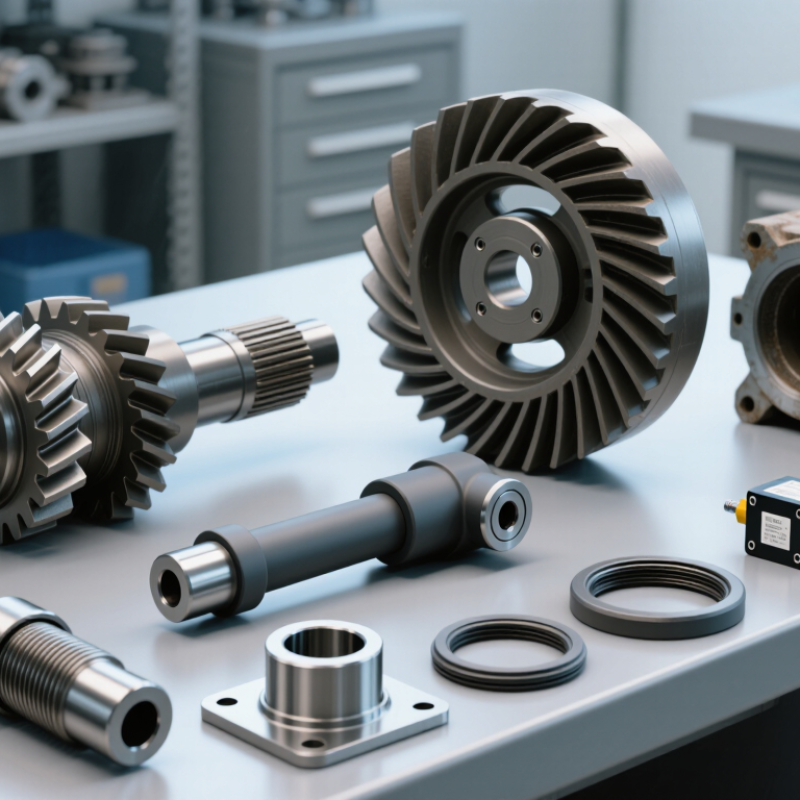
What Are the Top Gearbox Accessories for Global Buyers?

Gearbox Accessories: Purpose, Types, and Selection Criteria

What Are the Top Gearbox Accessories for Global Buyers?

Gearbox accessories support protection, monitoring, installation, and service life. Common options include breather filters, oil-level indicators, cooling fans, heaters, torque arms, backstops, and vibration sensors. A breather filter helps prevent dust and moisture from entering during temperature changes. An oil sight glass makes daily inspection quicker. Small details matter.

Selection should begin with operating conditions, not catalogue appearance. Check torque, speed, duty cycle, mounting position, ambient temperature, and lubricant compatibility. For outdoor equipment, buyers may need sealed breathers, corrosion-resistant housings, and reliable shaft seals. For heavy conveyor systems, a backstop or torque arm can reduce movement and installation stress. These choices should match the gearbox manual and applicable ISO requirements.

The International Energy Agency reported that electric motor systems use nearly half of global electricity, making mechanical efficiency a serious purchasing concern. Grand View Research estimated the industrial gearbox market at about USD 28 billion in 2023, with continued growth expected through 2030. This expansion increases accessory choices, but more options can create confusion. In field inspections, low-cost sensors sometimes fail because vibration, cable routing, or temperature was ignored. I would not treat a digital monitor as automatically superior. Buyers should request test data, ingress protection ratings, spare-part availability, and clear maintenance intervals. Regional service capability also matters. A perfect accessory is useless when replacement parts take months to arrive.

Essential Sealing and Lubrication Accessories for Gearbox Reliability

For gearbox buyers, sealing and lubrication accessories often determine whether a unit survives dusty ports, humid factories, or cold warehouses. Small part. Yet a hardened lip, correct elastomer, and accurate fit can prevent oil loss and abrasive ingress. Buyers should check shaft speed, oil type, temperature, and surface finish before selecting a seal. An attractive price means little when installation dimensions are wrong.

A clogged breather can pull moisture through seals during cooling. That failure is easy to miss. Useful accessories include oil sight glasses, magnetic drain plugs, level indicators, filters, and grease fittings. A sight glass supports quick inspection when oil becomes cloudy or drops below the marked level. A magnetic plug can collect fine metal particles before they circulate through the gears. During maintenance, technicians should clean these parts carefully and record oil color, odor, and debris.

Compatibility deserves more attention than catalog appearance. Confirm thread standards, gasket materials, pressure ratings, and service access. Desiccant breathers can reduce moisture entering gearboxes in humid environments. However, they are not magic. They require replacement when saturated, or their protection becomes misleading. One practical mistake is treating every leak as a seal problem. Excess pressure, misalignment, worn shafts, or overfilled oil may be responsible. Some specifications remain uncertain across international supply chains. Buyers should request dimensional drawings, material data, and installation guidance, then verify them against the actual gearbox before ordering.

Top Gearbox Accessories for Global Buyers

Essential sealing and lubrication accessories for gearbox reliability

The chart shows typical inspection intervals used for industrial gearbox maintenance planning. Breathers, oil levels, and seals require frequent checks because contamination and leakage can quickly reduce lubricant performance. Actual intervals should be adjusted according to load, operating temperature, dust exposure, lubricant type, and the gearbox manufacturer’s service requirements.

Mounting, Coupling, and Alignment Accessories for Gearbox Systems

For global gearbox buyers, accessories deserve the same attention as the gearbox itself. Mounting hardware controls stability, load transfer, and service life. A rigid baseplate, correctly sized bolts, and precision shims help prevent soft-foot problems. Use corrosion-resistant fasteners where humidity, salt, or washdown exposure is expected. Check bolt grade, thread engagement, and foundation flatness before installation. Small details matter.

Couplings connect shafts while absorbing limited misalignment and shock. Select them by torque, speed, bore size, temperature, and starting conditions. Flexible couplings can reduce vibration, but they cannot excuse poor alignment. Add a suitable coupling guard for safer maintenance access.

Hub fit also deserves care. Excessive clearance creates fretting, while forced fitting may damage bearings. Measure twice. Then verify.

Alignment accessories include dial indicators, laser tools, taper gauges, and shim packs. Laser systems are fast, yet they still need clean targets and stable brackets. Correct angular and parallel errors in both planes. Record cold alignment values when thermal growth affects operating position.

Field measurements sometimes disagree with drawings. That is not unusual. Recheck the foundation, shaft runout, and mounting torque before blaming the gearbox.

A practical purchase list includes spare shims, replacement coupling elements, calibrated measuring tools, and clear installation instructions. One overlooked washer can delay commissioning for days.

Monitoring and Protection Accessories for Safe Gearbox Operation

For global buyers, monitoring accessories should protect the gearbox before visible damage appears. Vibration sensors detect bearing wear, gear-mesh faults, and misalignment. Temperature probes reveal lubrication loss or overloaded operation. Oil particle and moisture sensors add valuable evidence inside sealed housings.

Trends matter more. ISO 20816 provides guidance for evaluating machine vibration, while ISO 13374 supports structured condition-monitoring data. The U.S. Department of Energy’s Operations and Maintenance Best Practices Guide reports potential maintenance-cost reductions of 25–30% through predictive maintenance. It also identifies possible downtime reductions of 35–45%. These figures depend on data quality, maintenance discipline, and equipment design. They are not automatic promises.

Alarm relays, pressure switches, speed sensors, and remote gateways strengthen protection. A gateway can send a warning when vibration rises beside a hot oil reading. That combination is more useful than one isolated alarm. Breathers and desiccant units also help control moisture during temperature changes. Moisture is quiet, but destructive. IEA reports that industry consumed about 37% of global final energy in 2022, making efficient rotating equipment important for operating costs. However, a sensor is not a maintenance strategy. Low-cost devices may drift, and excessive alarms can create fatigue. A practical buyer should request calibration records, ingress protection ratings, communication protocols, and clear failure thresholds. Human inspection still matters. We should remain cautious when a dashboard looks perfect.

Global Buying Factors: Compatibility, Standards, and Maintenance Needs

For global buyers, gearbox accessories should begin with compatibility, not appearance. A torque arm must match the gearbox housing, shaft diameter, rotation, and driven load. Couplings also need correct bore sizes, misalignment limits, and service factors. Fit is not enough. A neat catalog match can still fail under shock loads, dust, or frequent reversing.

Standards reduce uncertainty across borders. Check gear accuracy against ISO 1328 and gearbox calculations against ISO 6336. Use IEC 60529 ratings when selecting enclosures for wet or dusty locations. Vibration sensors should support measurements aligned with ISO 20816. These references help engineers compare suppliers using the same language. The U.S. Department of Energy’s Industrial Motor Systems Market Assessment reports that motor-driven systems consume about 69% of industrial electricity. Efficient accessories therefore influence more than installation convenience.

Maintenance conditions deserve equal attention. Oil-level windows, magnetic drain plugs, breathers, heaters, and temperature sensors can shorten inspection time. A food-processing site may require corrosion-resistant guards and easy cleaning. A remote mine may need sealed sensors, long-life grease, and local replacement parts. Technicians often discover that low-cost couplings create expensive downtime. Measure twice. Buyers should also verify thread standards, spare-part availability, documentation, and after-sales training. One weakness remains easy to overlook: global specifications rarely capture every local climate or operator habit.

What Are the Top Gearbox Accessories for Global Buyers? — Global Buying Factors: Compatibility, Standards, and Maintenance Needs
Accessory Main Function Key Compatibility Checks Relevant Standards or Ratings Typical Maintenance Need Global Buying Priority
Flexible Coupling Connects the gearbox shaft to a motor or driven machine while accommodating limited angular, parallel, and axial misalignment. Check shaft diameter, keyway or shrink-disc arrangement, rated torque, maximum speed, bore tolerance, and allowable misalignment. Selection is commonly based on manufacturer torque and speed data; dimensional interfaces may follow ISO or DIN practices depending on the coupling design. Inspect the element for cracking, wear, and heat damage. Lubricated types require periodic grease inspection or replacement. Essential
Motor Adapter or IEC Flange Allows an IEC-frame electric motor to be mounted directly to the gearbox. Verify IEC motor frame size, flange type, shaft extension, pilot diameter, bolt-circle dimensions, and motor weight limits. IEC 60072-1 provides dimensional guidance for rotating electrical machines, including frame and mounting dimensions. Check mounting bolts, pilot fit, shaft seal condition, and alignment during planned shutdowns. Essential for Direct Drive
Torque Arm Supports a shaft-mounted or hollow-shaft gearbox and reacts the housing torque without rigidly fixing the unit. Confirm gearbox mounting position, reaction load, arm length, pivot location, operating torque, and required clearance. Design should follow the gearbox maker’s load limits and applicable machinery safety requirements; no single universal torque-arm dimension applies. Inspect pivot bushes, fasteners, welds, and elastomeric elements. Keep the arm free from binding. Essential for Shaft-Mounted Units
Backstop or Overrunning Clutch Prevents reverse rotation in conveyors, hoists, pumps, and other applications where rollback could damage equipment or create a hazard. Check rotation direction, maximum overrunning speed, holding torque, shaft arrangement, ambient temperature, and duty cycle. Selection should be coordinated with the machinery risk assessment and applicable regional safety regulations. Monitor noise, temperature, lubricant condition, and signs of slipping. Replacement intervals depend on load and duty. Safety-Critical
Output Shaft Seal Kit Prevents lubricant leakage and protects the gearbox from dust, moisture, and process contaminants. Match shaft diameter, seal housing, seal material, rotation speed, pressure, lubricant type, and operating temperature. Elastomer selection may consider compatibility with mineral oils, synthetic oils, food-grade lubricants, or aggressive chemicals. Inspect for leakage, hardened lips, shaft grooves, and contamination. Replace when leakage or seal damage is detected. High
Breather or Desiccant Breather Equalizes internal pressure while reducing the entry of dust and moisture caused by thermal expansion and contraction. Check port thread, airflow capacity, mounting orientation, gearbox oil volume, environmental humidity, and contamination level. For outdoor or washdown service, the enclosure and breather arrangement should support the required IP protection level under IEC 60529. Replace saturated desiccant or clogged filter media and verify that the breather is not blocked. High for Outdoor Service
Oil Level Indicator or Sight Glass Provides a visual means of checking lubricant level and, in some designs, lubricant condition. Verify oil level reference, port thread, installation orientation, temperature range, viewing clarity, and chemical compatibility. Oil level and inspection arrangements should follow the gearbox installation manual and lubricant manufacturer’s guidance. Clean the viewing window and check for cracks, clouding, leakage, or an abnormal oil level. High
Oil Heater Maintains lubricant flowability during cold starts, standby periods, or low-temperature operation. Check supply voltage, power rating, immersion depth, thermostat setting, oil type, enclosure requirements, and available space. Electrical components should be selected for the destination market’s voltage system and applicable electrical safety requirements. Test insulation, thermostat operation, wiring, and heater surface condition before cold-season operation. Climate-Dependent
Cooling Fan or Fan Guard Improves heat dissipation when gearbox losses, ambient temperature, or duty cycle exceed natural cooling capacity. Check shaft speed, airflow direction, fan diameter, guard clearance, motor power, ambient temperature, and dust loading. Fan guards should meet applicable machinery safety requirements; motor and enclosure selections may require IEC 60034-related conformity. Remove dust and debris, inspect blades and guards, and check vibration and fastening regularly. Duty-Dependent
Oil Pump and Filtration Package Provides forced lubrication, heat removal, and particulate filtration for high-speed, high-load, or continuous-duty gearboxes. Confirm oil flow rate, pressure, viscosity range, filtration rating, pump direction, reservoir capacity, and alarm interfaces. Filtration performance is normally specified by micron rating and beta ratio; the required value depends on bearing and gear clearances. Replace filter elements, check pump pressure, inspect hoses, and test low-flow or low-pressure alarms. High for Heavy Duty
Mounting Base or Adapter Plate Provides a rigid interface between the gearbox and the machine frame or foundation. Verify bolt pattern, center height, permissible loads, flatness, base stiffness, corrosion protection, and access for alignment. Foundation and fastener design should be checked against the gearbox reaction forces and local structural requirements. Inspect bolt torque, grout or shims, corrosion, cracks, and changes in alignment. Essential for Custom Installations
Condition-Monitoring Sensor Tracks vibration, temperature, speed, oil condition, or operating hours to support predictive maintenance. Check sensor type, measurement range, mounting method, connector, signal output, data protocol, and control-system compatibility. Vibration monitoring practices commonly reference ISO 20816; hazardous-area installations may require ATEX or IECEx certification. Verify calibration, cable integrity, sensor mounting, and alarm thresholds at scheduled intervals. Recommended
Explosion-Protected Enclosure or Accessory Set Supports safe operation of electrical accessories in potentially explosive atmospheres when the application requires it. Confirm hazardous-area zone, gas or dust group, temperature class, ambient temperature, cable entry, and certification documentation. Potentially explosive atmospheres in Europe may fall under ATEX Directive 2014/34/EU; IECEx certification is widely used internationally. Inspect seals, cable glands, covers, grounding, and certification markings. Do not modify certified equipment without approval. Mandatory Where Applicable
Buyer note: Final accessory selection should be confirmed against the gearbox datasheet, shaft and mounting drawings, lubricant specification, operating environment, local electrical requirements, and the complete machinery risk assessment.

FAQS

What should buyers check before selecting a gearbox seal?

Check shaft speed, oil type, temperature, and surface finish. Confirm the elastomer and sealing dimensions. A hardened lip can cause oil loss. An attractive price is not enough.

How can a clogged breather damage gearbox reliability?

Cooling can create negative pressure inside the gearbox. A clogged breather may pull moisture through the seals. Inspect breathers during scheduled maintenance. This failure is easy to miss.

Which accessories help monitor gearbox oil condition?

Oil sight glasses show oil level and clarity quickly. Level indicators provide another visual check. Record oil color, odor, and debris. Cloudy oil deserves attention.

Why are magnetic drain plugs useful?

They collect fine metal particles before circulation through the gears. Clean the plug carefully during oil changes. Unexpected debris may indicate internal wear. Do not ignore small particles.

When should a desiccant breather be replaced?

Replace it when the desiccant becomes saturated. A saturated breather gives misleading protection. Inspect it more often in humid environments. It is not magic.

How can buyers confirm accessory compatibility?

Confirm thread standards, gasket materials, pressure ratings, and service access. Request dimensional drawings and material data before ordering. Compare every detail with the actual gearbox. Catalog appearance can mislead.

What mounting details improve gearbox stability?

Use a rigid baseplate, correctly sized bolts, and precision shims. Check foundation flatness and thread engagement. Use corrosion-resistant fasteners in humid or salty areas. One overlooked washer can delay commissioning.

How should buyers select and install shaft couplings?

Match torque, speed, bore size, temperature, and starting conditions. Flexible couplings absorb limited misalignment and shock. They cannot replace accurate alignment. Check hub fit carefully. Excessive clearance causes fretting, while forced fitting may damage bearings.

Which tools support accurate gearbox alignment?

Useful tools include dial indicators, laser tools, taper gauges, and shim packs. Correct angular and parallel errors in both planes. Keep targets clean and brackets stable. Record cold alignment values when thermal growth matters. Drawings and field measurements may disagree. Recheck before blaming the gearbox.

Conclusion

Gearbox Accessories play a vital role in improving transmission reliability, efficiency, and service life. This overview explains their main purposes and types, including sealing components that prevent lubricant loss and contamination, lubrication accessories that support smooth operation, and mounting, coupling, and alignment parts that help maintain stable power transfer. Selecting the right accessories requires careful attention to gearbox design, operating conditions, load requirements, and installation accuracy.

The article also introduces monitoring and protection accessories used to track temperature, vibration, oil condition, and other warning signs before they develop into serious failures. For global buyers, successful purchasing depends on verifying dimensional and performance compatibility, reviewing applicable technical standards, and considering local maintenance capabilities, replacement availability, and long-term operating costs. By evaluating these factors together, buyers can create safer, more dependable gearbox systems and reduce downtime throughout the equipment’s service life.

Sienna

Sienna

Sienna is a skilled marketing professional with a deep expertise in our company’s core products and services. With a passion for innovation and detail, she plays a pivotal role in crafting insightful blog posts that not only highlight the unique features of our offerings but also provide valuable......