Choosing among Gear Drive Systems is rarely a simple matter of comparing catalog prices. Global buyers must match torque, speed, load pattern, installation space, and local service capability. A conveyor in a dusty cement plant needs different protection than a food-processing mixer operating near frequent washdowns. Small details often decide long-term performance.
This guide examines leading options, including helical, bevel-helical, planetary, worm, and shaft-mounted drives. Each design offers a different balance of efficiency, starting torque, noise, size, and maintenance demand. Planetary units can deliver high torque within a compact housing. Worm drives may offer useful reduction ratios, but their heat and efficiency limits deserve careful review. Bevel-helical systems often suit right-angle layouts where steady power transmission matters.
Reliable purchasing decisions require more than impressive brochures. Buyers should check verified ratings, service factors, lubrication requirements, duty cycles, sealing quality, and replacement-part availability. Manufacturer test data helps, but field references can reveal problems that specifications overlook. Ask how the unit performs after thousands of operating hours, not only during factory testing.
No system wins everywhere. That is the difficult part. A lower purchase price may create higher energy or maintenance costs later. Even experienced engineers can miss installation misalignment or inadequate cooling. The comparison ahead uses practical selection criteria and internationally recognized engineering principles. It aims to help distributors, plant managers, and equipment builders choose confidently, while leaving room for site-specific testing and professional validation.
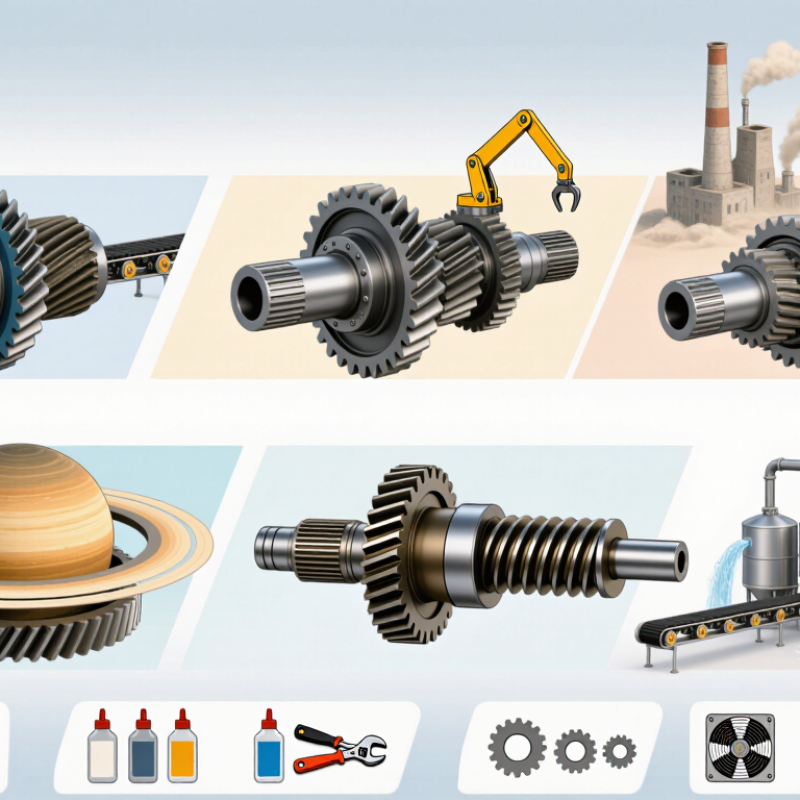
What Are the Top Gear Drive Systems for Global Buyers?
Gear Drive Systems: Definition, Functions, and Core Components
A gear drive system transfers mechanical power between rotating shafts. It changes speed, torque, or rotation direction through meshing gears. This makes controlled motion possible in conveyors, mixers, pumps, lifting equipment, and production lines.
The main components include gears, shafts, bearings, seals, a housing, and lubrication. Spur gears suit straightforward parallel-shaft applications. Helical gears run more quietly and handle higher loads. Bevel gears transfer motion between intersecting shafts. Worm gears provide strong speed reduction, although they may lose more energy as heat.
In practical equipment checks, alignment deserves close attention. A small shaft offset can create vibration, noise, and uneven tooth wear. Bearing quality matters too. It supports smooth rotation and limits unwanted movement. Seals protect internal parts from dust, moisture, and lubricant leakage.
Load, speed, duty cycle, temperature, and installation space should guide system selection. Global buyers also need to review local voltage requirements for connected motors and available maintenance skills. A compact gearbox may save space but restrict cooling. A larger housing may improve durability but increase installation costs.
A perfect specification rarely exists. Field conditions often differ from design assumptions. I have seen systems fail early because operators ignored start-up loads. That weakness should be acknowledged. Regular oil checks, temperature readings, and vibration inspections provide useful evidence before damage becomes expensive. Specification sheets help, but real operating data is better.
| Gear Drive System | Definition and Operating Principle | Primary Motion or Shaft Arrangement | Typical Mechanical Efficiency | Main Functions | Core Components | Key Advantages | Common Limitations | Typical Applications | Best Buyer Selection Criteria |
|---|---|---|---|---|---|---|---|---|---|
| Spur Gear Drive | Uses straight teeth parallel to the shaft axis to transmit torque between parallel shafts. | Parallel shafts; fixed-ratio rotary motion. | Approximately 95–99% per gear mesh under suitable lubrication and alignment. | Speed reduction or increase, torque transmission, and directional control. | Pinion, spur gear, shafts, keys or splines, bearings, housing, seals, and lubricant. | Simple design, high efficiency, easy manufacturing, and relatively low cost. | Can be noisy at high speed; sudden tooth engagement may increase vibration and impact loading. | Conveyors, general machinery, pumps, machine tools, and low-to-medium-speed reducers. | Choose when efficiency, simplicity, cost control, and parallel-shaft operation are priorities. |
| Helical Gear Drive | Uses angled teeth that engage gradually, creating continuous tooth contact and smoother power transfer. | Usually parallel shafts; crossed-axis versions are also possible. | Approximately 94–98% per mesh, depending on helix angle, load, speed, and lubrication. | High-load speed reduction, smooth torque transmission, and noise reduction. | Helical pinion and gear, thrust-capable bearings, shafts, housing, seals, and lubricant. | Quiet operation, high load capacity, improved durability, and smoother engagement than spur gears. | Generates axial thrust, requires stronger bearings, and generally costs more than spur gearing. | Industrial gearboxes, material-handling equipment, compressors, mixers, and automotive transmissions. | Select for continuous-duty service, higher loads, lower noise, and smooth operation. |
| Bevel Gear Drive | Uses conical gears to transfer motion and torque between intersecting shafts, commonly at 90 degrees. | Intersecting shafts; angular redirection of rotary motion. | Approximately 93–98% per mesh, depending on gear type, alignment, and operating conditions. | Changes shaft direction, reduces speed, and transmits torque in compact layouts. | Pinion, bevel gear, shafts, bearings, housing, adjustment elements, seals, and lubricant. | Efficient right-angle transmission, compact arrangement, and suitability for higher power levels. | More sensitive to alignment and manufacturing accuracy; may generate axial and radial loads. | Right-angle drives, vehicle differentials, conveyors, agricultural equipment, and industrial machinery. | Choose when the shafts must intersect or when a compact 90-degree drive is required. |
| Worm Gear Drive | A worm screw meshes with a worm wheel to provide large speed reduction in a compact housing. | Usually non-intersecting shafts arranged at approximately 90 degrees. | Approximately 40–90%; efficiency varies significantly with ratio, lead angle, materials, and lubrication. | Large speed reduction, compact power transmission, and in some designs resistance to back-driving. | Worm, worm wheel, shafts, bearings, housing, seals, and specialized lubricant. | High reduction in one stage, compact size, quiet running, and possible self-locking behavior. | Lower efficiency, heat generation, sliding wear, and self-locking cannot be assumed for every design. | Lifts, gates, conveyors, positioning mechanisms, rotary tables, and compact actuators. | Select based on required ratio, thermal capacity, back-driving requirements, duty cycle, and lubrication. |
| Planetary Gear Drive | Uses multiple planet gears rotating around a central sun gear inside or around a ring gear. | Coaxial shafts; compact rotary transmission with multiple possible inputs and outputs. | Approximately 90–97% per stage, depending on configuration, speed, load, and bearing losses. | High torque multiplication, compact reduction, speed matching, and load sharing. | Sun gear, planet gears, planet carrier, ring gear, pins, bearings, shafts, housing, and lubricant. | High torque density, coaxial packaging, good balance, strong load capacity, and flexible ratios. | More complex assembly, tighter manufacturing tolerances, and higher inspection and service requirements. | Robotics, aerospace mechanisms, wind turbine systems, mobile equipment, automation, and high-performance drives. | Choose when torque density, compact dimensions, coaxial alignment, or high positioning accuracy is important. |
| Rack-and-Pinion Drive | Converts rotary motion from a pinion into linear motion along a straight toothed rack. | Rotary-to-linear motion; travel distance is determined by pinion rotation and pitch. | Approximately 94–98% in well-aligned systems, depending on tooth profile, preload, and lubrication. | Linear positioning, linear propulsion, steering, and conversion of torque into thrust. | Pinion, rack, support bearings, guides, housing or mounting structure, lubrication, and optional preload system. | Long travel capability, direct motion conversion, high speed potential, and scalable installation length. | Requires accurate alignment and guidance; backlash and tooth wear can affect positioning accuracy. | CNC machines, robotic axes, automated gates, lifting platforms, steering systems, and linear actuators. | Select according to travel length, thrust, speed, backlash, positioning accuracy, and environmental exposure. |
Efficiency figures are typical engineering ranges rather than guaranteed ratings. Actual performance depends on gear geometry, reduction ratio, load, speed, temperature, lubrication, alignment, manufacturing quality, and the number of stages.
It suits compact machines needing high torque and strong positioning accuracy. Multiple gears share the load inside a small housing. Tight clearances require careful lubrication and alignment.
Helical drives work well in conveyors, mixers, packaging lines, and other steady-duty machinery. Angled teeth engage gradually, reducing vibration and operating noise. They usually provide good efficiency.
Choose a bevel drive when the machine needs a 90-degree change in rotation direction. It helps place motors in narrow layouts. Review bearing loads carefully.
Worm drives provide compact reduction and quiet operation in one stage. Sliding contact creates heat and reduces efficiency. Back-driving resistance should be tested, not assumed.
Compare rated torque at the actual speed, ratio range, backlash, startup torque, and duty cycle. Also check thermal capacity, radial loads, noise, vibration, and efficiency. Peak ratings can mislead.
Dust, humidity, salt air, and temperature changes can shorten service life. Sealed housings help in dusty areas. Corrosion-resistant finishes may suit coastal facilities. Heat still needs checking.
Check shaft alignment, mounting stiffness, radial loads, and lubrication before operation. Poor alignment can cause vibration, leakage, and damaged bearings. Small errors become expensive.
Request clear drawings, test methods, material records, maintenance instructions, and replacement-part information. Compare energy use and service intervals, not price alone. Ask for testing under the real operating cycle.
No. Record starts, stops, overloads, ambient temperature, and cleaning methods across several shifts. Laboratory data helps, but field conditions behave differently. My review could still miss seasonal loads.
Gear Drive Systems are mechanical power transmission solutions that use meshing gears to transfer torque, control speed, and change rotational direction. Their main components typically include gears, shafts, bearings, housings, seals, and lubrication systems. Planetary, helical, bevel, and worm drives each offer different advantages: planetary designs provide high torque density, helical drives support smooth and efficient operation, bevel drives redirect power between intersecting shafts, and worm drives deliver strong speed reduction with compact construction.
For global buyers, selecting the right system requires comparing load capacity, speed range, efficiency, noise, durability, thermal performance, and service requirements. The application environment is equally important, including dust, moisture, temperature, available space, and expected duty cycle. Buyers should also consider international standards, installation alignment, safety requirements, maintenance access, spare parts, and total ownership cost. A well-matched gear drive can improve reliability, reduce energy loss, simplify maintenance, and provide stable long-term performance across industrial applications.

 Lahabra Motors