Choosing the right Custom Gear Assembly supplier can influence efficiency, noise, service life, and production stability. A small alignment error may create vibration across an entire machine. The supplier is not merely a parts vendor. It becomes part of your engineering and risk-management process.
The U.S. Department of Energy reports that motor-driven systems consume more than 70% of industrial electricity in the United States. This makes efficient transmission design commercially important, not just technically attractive. A capable supplier should explain gear geometry, material selection, lubrication, heat treatment, and inspection methods. They should also connect these details to your operating speed, torque, load cycles, and environment.
Industry research supports a more disciplined evaluation. Deloitte’s 2024 Smart Manufacturing and Operations Survey found that many manufacturers view smart manufacturing as a major competitiveness driver. Traceable production data, digital inspection records, and responsive communication now matter beside machining capability. Still, reports do not replace direct evidence. A polished website cannot prove consistent runout or dependable delivery.
This guide presents five practical checks for supplier selection. It examines engineering experience, quality systems, customization depth, testing discipline, and supply-chain reliability. Ask for measurable tolerances. Request sample inspection reports. Visit the factory when possible. Some suppliers may resist detailed questions, and that is worth noticing. No evaluation method is perfect, either. Requirements change, forecasts fail, and even experienced teams can overlook assembly-level risks. A careful comparison reduces those risks before tooling, validation, and mass production begin.
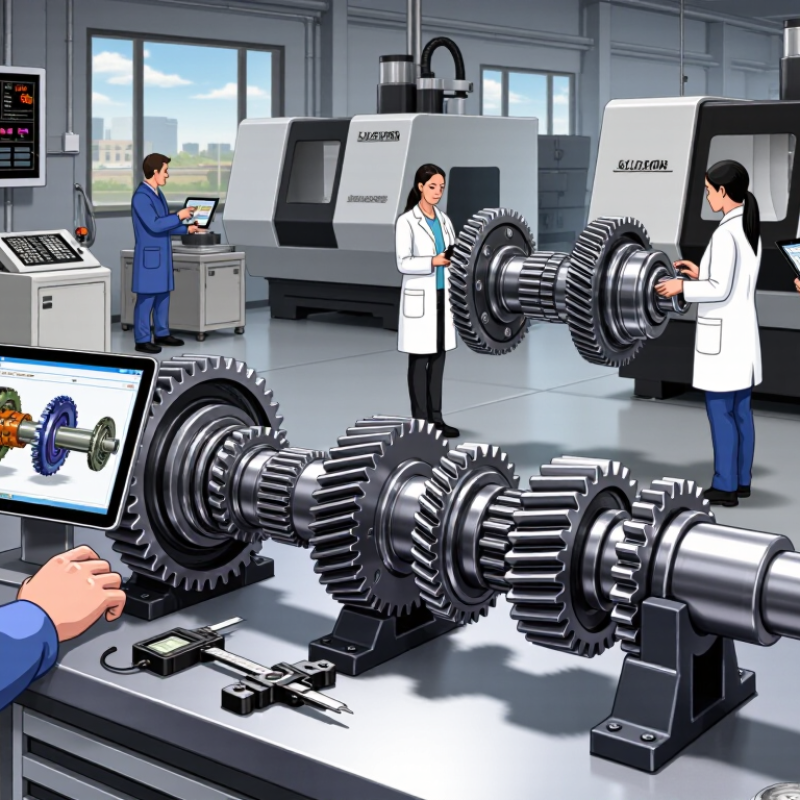
Define Your Custom Gear Assembly Requirements
Choosing a custom gear assembly supplier starts with a precise requirement sheet. State the required torque, input speed, output speed, gear ratio, and expected service life. Include the load pattern, such as continuous, intermittent, or shock loading. A small difference can change the gear design significantly. Measure the available installation space, shaft diameter, mounting holes, and allowable weight. Sketches with dimensions are useful. Clear drawings prevent expensive revisions later.
Describe the working environment in practical terms. Will the assembly face dust, moisture, heat, chemicals, or frequent washing? Specify preferred materials, surface treatments, lubrication methods, and corrosion expectations. Also define acceptable backlash, noise level, vibration, and rotational play. If the assembly connects to an existing machine, share interface drawings and operating data. Do not rely on memory. It often misses critical details.
Prototype requirements deserve attention. Ask whether the supplier can produce samples, inspection reports, and dimensional records before volume production. Confirm how they control tooth profile, concentricity, hardness, and final assembly alignment. Tolerances should match the application, not appear impressive on paper. Overly tight tolerances may increase cost without improving performance. I have seen teams focus on gear strength while overlooking lubrication access. That small omission can create maintenance problems. Leave room for honest discussion when your requirements are incomplete. A capable supplier should identify gaps, question assumptions, and recommend practical tests.
| Tip | Requirement to Define | Key Technical Specifications | Reference Data and Practical Targets | Supplier Evidence to Request | Evaluation Question |
|---|---|---|---|---|---|
| 1 | Define the operating load and speed | Continuous torque, peak torque, input speed, output speed, duty cycle, direction of rotation, and expected service life. |
Continuous load
Peak load
RPM
State the required torque in N·m and speed in revolutions per minute. Include acceleration, shock loads, and operating hours per day. |
Load calculations, torque and speed test results, duty-cycle analysis, and documented design margins. | Can the supplier validate performance under both continuous and peak operating conditions? |
| 2 | Specify gear geometry and transmission performance | Gear type, module or diametral pitch, tooth count, pressure angle, helix angle, ratio, backlash, contact ratio, and allowable transmission error. | Common involute pressure angles include 20° for many standard spur and helical gear designs. Define the exact ratio and allowable backlash for the application rather than relying on a generic value. | Gear inspection reports, tooth-profile and lead measurements, backlash records, gear-ratio verification, and inspection equipment details. | Which gear inspection standards and measurement methods will be used for the finished assembly? |
| 3 | Choose materials and heat-treatment requirements | Gear material, shaft material, hardness range, case depth, core hardness, corrosion resistance, lubrication compatibility, and temperature limits. | Typical steel gear solutions may use carburizing, induction hardening, or nitriding when higher wear resistance and fatigue strength are required. The selected process must match the load, speed, and service environment. | Material certificates, heat-treatment charts, hardness test results, case-depth measurements, and traceability records for each production batch. | Can every critical material and heat-treatment result be traced to the supplied assembly? |
| 4 | Set dimensional, interface, and assembly tolerances | Bore and shaft dimensions, keyways or splines, mounting pattern, bearing seats, concentricity, runout, axial play, surface finish, and datum structure. | Use a fully dimensioned drawing or 3D model with GD&T where appropriate. Critical fits should be selected according to the shaft, bearing, load, temperature, and assembly method. | Coordinate-measuring-machine reports, capability studies, first-article inspection results, functional gauges, and assembly-fit records. | How will the supplier control the interfaces that determine alignment, runout, and installation repeatability? |
| 5 | Confirm validation, quality, and production capability | Prototype quantity, annual volume, inspection plan, acceptance criteria, packaging, documentation, change control, lead time, and scalability. | A practical qualification process normally includes drawing review, prototype inspection, functional testing, endurance or load testing when required, and approval of a documented production sample. | Quality management certificates, process flow, control plan, nonconformance procedure, corrective-action records, production capacity data, and sample inspection documentation. | What controls ensure that production units remain consistent after the prototype stage? |
State torque, input speed, output speed, gear ratio, and expected service life. Include continuous, intermittent, or shock loading. Do not guess.
Record installation space, shaft diameter, mounting holes, and allowable weight. A dimensioned sketch can prevent costly design revisions.
Mention dust, moisture, heat, chemicals, and washing frequency. Also specify materials, surface treatment, lubrication access, and corrosion expectations.
Define acceptable backlash, noise, vibration, and rotational play. Small differences can change the gear design significantly.
Ask for samples, dimensional records, inspection reports, and first-article results. Confirm tooth profile, concentricity, hardness, and assembly alignment.
No. Tighter tolerances may increase cost without improving performance. The application should determine the tolerance, not impressive paperwork.
It should cover materials, machining, heat treatment, assembly, and final testing. Request measured values, calibration dates, operators, and corrective actions.
Ask about tooth thickness, profile accuracy, runout, backlash, hardness, and surface finish checks. Skilled operators still matter.
Each assembly should connect to material batches, process records, and inspection results. This helps identify problems instead of guessing later.
The supplier should stop production, investigate the cause, document findings, and prevent recurrence. No process is perfect. Honest answers matter.
Choosing the right Custom Gear Assembly supplier begins with clearly defining your technical requirements, including gear type, dimensions, materials, load capacity, tolerances, and expected operating conditions. A precise specification helps potential suppliers understand your project and provide accurate recommendations. You should also verify their engineering expertise, manufacturing equipment, design support, and ability to produce both prototypes and larger production runs.
Quality control is equally important. Review the supplier’s inspection methods, testing capabilities, documentation, and procedures for maintaining consistent results. When comparing options, consider the complete value rather than unit price alone, including lead times, minimum order quantities, production flexibility, and their ability to respond to design changes. Finally, assess communication, customer support, problem-solving, and long-term reliability. A dependable supplier should provide clear updates, address issues promptly, protect agreed specifications, and maintain stable quality throughout the partnership. Careful evaluation across these areas can reduce production risks and help ensure a successful, lasting supply relationship.

 Lahabra Motors