Choosing the best Precision Planetary Gearbox supplier in China starts with the application, not a polished catalog. A gearbox for a packaging line may face different duty cycles than one used in a robot joint. Small details matter. Required torque, reduction ratio, backlash, shaft layout, and mounting space should be clear before comparing quotations. Operating speed, load variation, temperature, and expected service life also shape the specification. These details can reveal a mismatch early. Even a well-made unit may perform poorly when its rating does not fit the machine.
Supplier evaluation should look beyond price and delivery promises. Ask how the manufacturer controls gear accuracy, assembly consistency, lubrication, and final inspection. Request test records, dimensional data, material information, and written warranty terms where applicable. Check whether engineers can review drawings and explain trade-offs in noise, efficiency, and backlash. A useful supplier answers with evidence, not only confidence. Still, no single factory is right for every project. Some buyers need customization; others value stable standard models and responsive after-sales support. Samples and pilot runs can reduce uncertainty, though they cannot replace long-term performance data. This guide examines practical selection criteria, supplier capabilities, and questions worth asking before purchase. Expect nuance. Claims of “best” deserve careful checking. Clear specifications and verifiable processes make the decision more dependable.
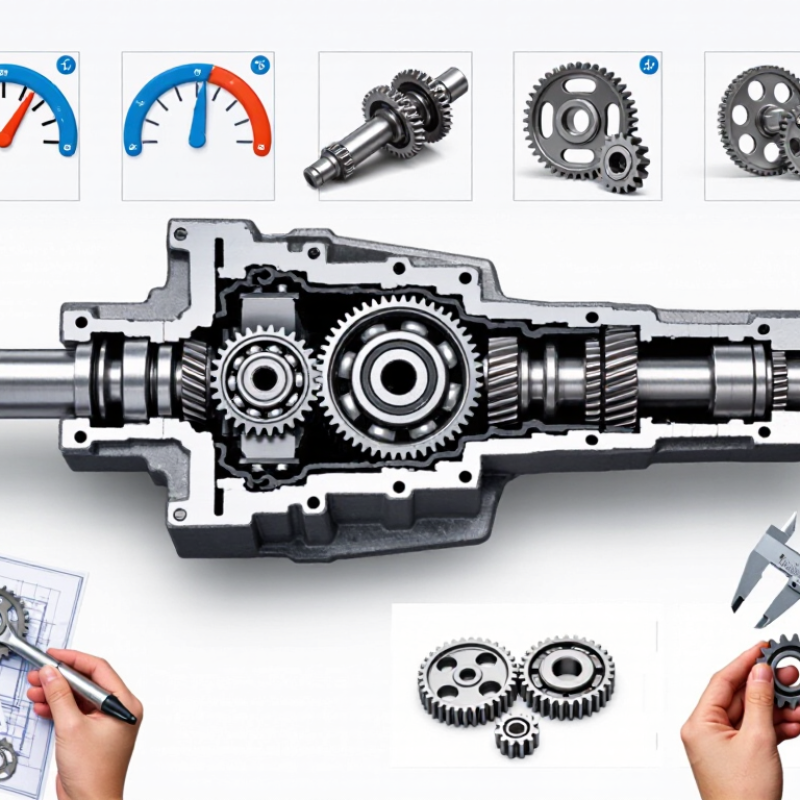
A precision planetary gearbox is a compact mechanism that changes speed and torque through a sun gear, several planet gears, and an outer ring gear. The sun gear drives the planets, which rotate around it while engaging with the ring. This arrangement shares the load across multiple contact points. It can deliver substantial torque in a relatively small space.
“Precision” usually refers to controlled backlash, consistent motion, and predictable positioning—not simply tight-looking parts. In a servo-driven machine, for example, excessive backlash may cause a small delay when the output reverses. That delay matters in a pick-and-place arm or a rotary table. Gear quality, bearing support, lubrication, and assembly all affect performance. So does the chosen ratio. A higher ratio can increase output torque, but it also reduces speed and may add inertia.
Small details count. A technician might check shaft alignment, listen for uneven noise, and measure backlash under specified conditions. Yet no gearbox is perfect. Real loads, temperature changes, and installation errors can shift results from catalog figures. It is worth matching the gearbox to the actual duty cycle, not just the motor’s rated power. That part is easy to overlook.
Best Precision Planetary Gearbox Supplier in China?
Which Performance Factors Define Gearbox Precision?
Precision is not a single number. It combines lost motion, repeatability, torsional stiffness, transmission error, and runout. ISO 1328-1:2013 classifies flank deviations in cylindrical gears, but it does not certify a complete planetary gearbox. Buyers should therefore request test conditions alongside performance figures. A reading without load, speed, and temperature details can mislead.
For example, a servo axis may reverse direction and show several arcminutes of lost motion. That small gap can become visible as a positioning error at the tool. Check repeatability under both directions of rotation, then compare stiffness in Nm/arcmin at a stated torque. Bearing preload, planet-pin alignment, and housing rigidity also affect results. Heat matters. A gearbox tested cold may behave differently after continuous operation. Real assemblies are less tidy than catalog tables suggest.
Tips: Ask for a test report showing backlash or lost motion, load, speed, and temperature. Compare units tested under the same setup. ISO 1328-1 is useful for gear-tooth accuracy, not a substitute for system-level gearbox data. Don’t overlook noise or vibration; they can reveal alignment issues that a single precision figure misses.
Precision planetary gearboxes are widely used where high torque must fit inside a compact space. In industrial robots, they drive joints that lift parts, turn wrists, and hold position during precise assembly. The International Federation of Robotics reported 541,302 industrial robot installations worldwide in 2023 in World Robotics 2024. That growing installed base helps explain demand for compact, low-backlash reducers on robot axes and automated production lines.
They also appear in machine tools, packaging equipment, conveyor drives, and some electric or hybrid vehicle systems. The International Energy Agency’s Global EV Outlook 2024 estimated nearly 14 million electric car sales in 2023, but this figure does not mean every vehicle uses a planetary gearbox. Gear design depends on the drivetrain. A planetary unit may suit a tight, high-load application, while heat, noise, backlash, and maintenance access still need careful review. Small details matter. For example, a gearbox that fits beneath a robot joint may still run too hot during repeated shifts. Selection is not always neat; real duty cycles can differ from catalog assumptions.
Typical planetary reduction ratio ranges by number of stages
Planetary gearboxes are commonly used in robotics, CNC and machine tools, packaging and factory automation, and mobile equipment. Adding stages increases the available reduction ratio; the ranges shown are typical engineering guidelines, not fixed limits. Actual ratios depend on the gearbox design and application.
Choosing a supplier takes more than comparing torque ratings and prices. The International Federation of Robotics’ World Robotics 2023 report recorded 553,052 industrial robot installations worldwide in 2022. Its 2024 report recorded 541,302 in 2023. These figures show a large, active automation market, but they do not prove any supplier’s quality. Numbers matter.
Ask for rated torque, allowable peak torque, backlash, torsional stiffness, and efficiency at your actual speed and load. Check whether test reports identify the measurement method, test conditions, and unit serial number. For example, a backlash figure without load, temperature, or measurement method is hard to compare.
Request gear accuracy documentation and clarify which inspection standard and grade were used. Then verify that the offered gearbox fits your motor, mounting space, and duty cycle.
A factory visit can reveal machining and inspection equipment, but it cannot replace evidence from production units. Ask for a sample and test it under realistic conditions: repeated starts, reversals, operating temperature, and noise. I would also check lead times, spare-part availability, and how the supplier handles failures.
Still, a polished catalog proves little. A sample may perform well while later batches vary, so request inspection records across multiple production lots.
Choosing a precision planetary gearbox supplier is less about finding the biggest catalog and more about matching the gearbox to the machine. Start with the actual requirements: output torque, speed, reduction ratio, duty cycle, backlash, and available mounting space. A compact unit may fit neatly, but repeated shock loads can shorten its service life. Ask how rated torque and backlash are measured, and request test data for the proposed configuration. Numbers need context.
Tips: Send a clear application sheet. Include motor details, load cycles, shaft dimensions, operating temperature, and expected annual quantity. Ask for a drawing and lubrication requirements before approving a sample. Check whether the supplier can explain test results in plain terms.
The best fit also depends on engineering support and production consistency. Ask who reviews your application and what happens if the first sample runs hotter or louder than expected. Confirm inspection points, traceability, spare-part availability, and realistic lead times. A low quotation can hide extra adaptation work, while a technically strong proposal may still miss your schedule. I would not treat a single successful bench test as proof of long-term performance; installation alignment and real load patterns matter too. Keep room for a second review after testing the gearbox in the actual machine.
It changes speed and torque using a central sun gear, planet gears, and an outer ring. The arrangement shares loads across several contact points.
It usually means controlled backlash, consistent movement, and predictable positioning. It is not just about parts that look tightly fitted.
Backlash can create a small delay when the output reverses direction. That delay may affect a robot arm placing a part or a rotary table changing position. Small delays matter.
No. A higher ratio can increase output torque, but it also reduces speed and may add inertia. The right balance depends on the machine.
They are used in industrial robots, machine tools, packaging equipment, and conveyor drives. They can suit applications with high torque and limited space.
Review output torque, speed, reduction ratio, backlash, duty cycle, and mounting space. Include shaft dimensions and operating temperature, too. Details get missed.
Provide motor details, load cycles, shaft dimensions, temperature range, and expected quantity. Request a drawing, lubrication requirements, and test data for the proposed setup.
Not necessarily. Real installation alignment, heat, and changing load patterns can affect results. Test the gearbox in the actual machine, then review it again.
A Precision Planetary Gearbox combines a compact planetary gear arrangement with controlled manufacturing to deliver reliable torque transmission, low backlash, and smooth motion. Its precision depends on factors such as gear accuracy, backlash, torsional stiffness, bearing quality, noise, efficiency, and consistency under load. These characteristics make it suitable for applications that require accurate positioning and dependable operation, including robotics, automation equipment, machine tools, and other motion-control systems.
When assessing suppliers in China, buyers should compare technical specifications, manufacturing and inspection processes, customization capabilities, product documentation, communication, delivery reliability, and after-sales support. The best supplier is not necessarily the one offering the lowest price; it is the one whose gearbox performance, quality controls, service, and lead times match the application’s operating conditions and long-term requirements. Clearly defining load, speed, accuracy, mounting, and environmental needs helps make that choice.

Lahabra Motors