Advanced Gear Technology is reshaping how buyers choose components for robotics, vehicles, industrial machinery, and precision equipment. The right gear can reduce noise, manage heavy loads, and keep motion accurate over long operating cycles. But technical labels alone do not guarantee a good fit. Buyers need to connect each design to real working conditions.
This guide introduces ten important gear technologies, including planetary, harmonic, bevel, and worm gear systems. Each offers different trade-offs in torque, backlash, efficiency, size, and maintenance. A compact harmonic drive may suit a robotic joint, while a bevel gearbox can redirect power through an angle. Details matter. So does the application.
Before comparing suppliers, consider operating speed, peak loads, duty cycle, lubrication, available space, and the consequences of downtime. Ask for relevant test data, material specifications, and service guidance, rather than relying only on catalog claims. Those details can reveal practical limits. They may also expose gaps in the information. No single gear type is best for every machine, and selection is rarely perfect on the first attempt. A careful review of these ten technologies can help buyers ask sharper questions, compare options fairly, and choose a solution that fits both current needs and future maintenance plans.
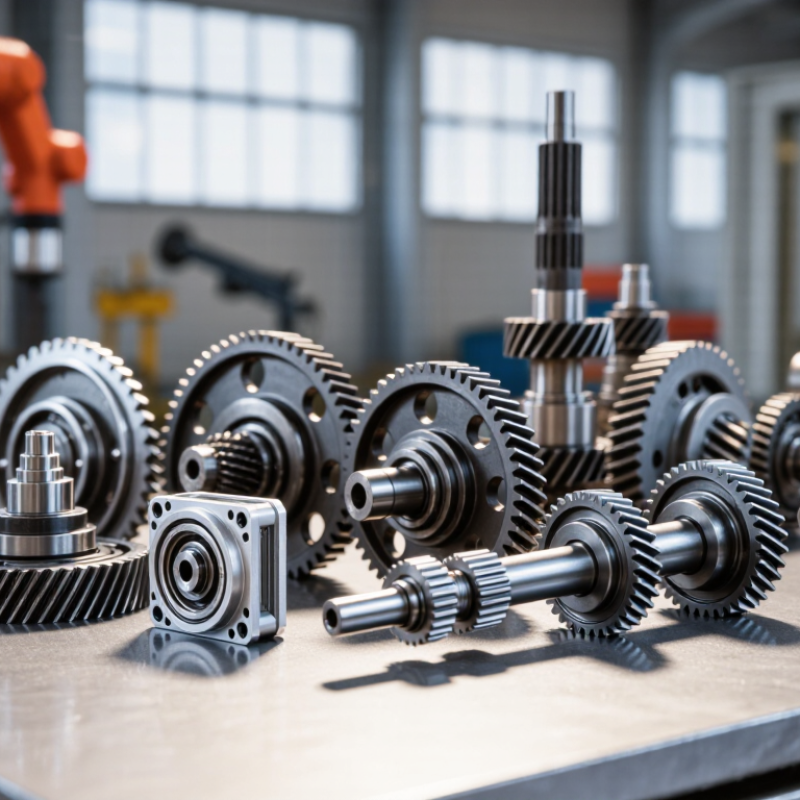
Advanced gear technology controls how power moves through a machine. A gearbox can reduce speed, increase torque, redirect rotation, or synchronize multiple shafts. Tooth geometry determines how smoothly gears mesh and how loads spread across their surfaces. Helical gears often run more quietly than straight-cut spur gears, while planetary sets package high reduction ratios into compact spaces. Bevel gears redirect power between intersecting shafts. Worm gears can provide large reductions, though friction may limit efficiency. Each design makes trade-offs.
The U.S. Department of Energy’s industry sourcebook reports that motor-driven systems consume about 69% of electricity used in U.S. manufacturing. That figure does not describe gearbox efficiency, but it shows why transmission losses matter. For buyers, material strength, heat treatment, lubrication, alignment, and operating temperature all affect service life. ISO 6336 provides methods for calculating the load capacity of cylindrical gears, helping engineers assess tooth strength rather than relying on appearance alone. Still, smooth operation can be misleading: a quiet unit is not automatically a durable one. Ask for load, speed, duty-cycle, and maintenance assumptions behind any performance claim. A small detail, perhaps, but often the one that gets missed.
Advanced gear technology covers more than smaller teeth or faster motors. Spur gears are simple and easy to inspect. Helical gears run more smoothly, while bevel gears redirect motion between intersecting shafts. Worm gears offer high reduction in a compact space, though friction can create heat. Planetary sets distribute load across several gears. Rack-and-pinion systems convert rotation into straight-line motion. Hypoid gears suit offset shafts. Cycloidal drives handle shock loads well. Harmonic drives provide compact, low-backlash motion, but their flexible elements need careful fatigue review. Magnetic gears transmit torque without tooth contact and may slip under overload.
Tips: Match the gear type to torque, speed, duty cycle, noise limits, and available space. Ask for measured backlash and temperature data, not only catalog ratings. Check lubrication needs and service access before choosing.
A good comparison also considers how the system behaves after months of real use. For example, a quiet helical unit may need more room than a spur option. A high-ratio worm drive may simplify a layout but lose efficiency as heat rises. No type wins everywhere. Even detailed specifications can miss vibration from a poorly aligned installation, so validate shortlisted designs under realistic loads.
| Gear Technology | How It Works | Typical Applications | Key Advantages | Buyer Considerations |
|---|---|---|---|---|
| Precision Planetary Gears | One or more planet gears rotate around a central sun gear inside an outer ring gear. | Robotics, machine tools, automation equipment, and compact drive systems. | High torque capacity for its size; coaxial input and output; multiple reduction ratios are possible. | Compare backlash, torsional stiffness, efficiency, rated torque, and service requirements for the intended duty cycle. |
| Strain-Wave (Harmonic) Gears | A flexible spline is elastically deformed by a wave generator to engage a rigid circular spline. | Robotic joints, positioning systems, and compact precision mechanisms. | High reduction ratios in a compact package; low backlash is available in suitable designs. | Check allowable torque, torsional stiffness, life under repeated flexing, and sensitivity to shock loads. |
| Cycloidal Pinwheel Reducers | An eccentric input drives a cycloidal disc that engages pins or rollers to create reduction. | Industrial robots, indexing equipment, and drives subject to shock or reversing loads. | Can provide high reduction in one stage and distribute load across multiple contact points. | Review output bearing capacity, backlash specification, vibration, lubrication, and performance at the required speed. |
| Spiral Bevel Gears | Conical gears with curved teeth transmit motion between intersecting shafts, commonly at a right angle. | Vehicle drivetrains, machine drives, and right-angle power transmission. | Smoother and quieter engagement than straight bevel gears at comparable operating conditions. | Confirm shaft angle, tooth geometry, mounting accuracy, lubrication, and the specified load and speed ratings. |
| Hypoid Gears | Curved-tooth gears transmit motion between non-intersecting shafts, with the pinion offset from the gear axis. | Vehicle differentials and compact right-angle drive arrangements. | Allows shaft offset and can support compact layouts with smooth operation. | Sliding action at the tooth contact makes lubricant selection and correct setup important; check thermal and efficiency requirements. |
| Double-Helical (Herringbone) Gears | Two opposing helical tooth rows are arranged side by side to help balance axial thrust. | Large compressors, turbines, marine drives, and heavy industrial gearboxes. | High load capacity and reduced net axial thrust compared with a single helical arrangement. | Assess manufacturing quality, alignment, lubrication, housing stiffness, and the space needed for the gear assembly. |
| Worm Gears | A screw-like worm meshes with a worm wheel, typically transmitting motion between perpendicular, non-intersecting shafts. | Conveyors, lifting equipment, rotary tables, and compact right-angle drives. | Can provide substantial reduction in a compact arrangement; some combinations resist back-driving, depending on design and conditions. | Sliding contact can produce heat and lower efficiency than many rolling-contact gear arrangements; verify lubrication and thermal limits. |
| Internal Ring Gears | Teeth are cut on the inside of a ring and mesh with external gears, often within a planetary gear set. | Planetary transmissions, compact reducers, and rotating machinery. | Supports coaxial layouts and compact integration with planet gears. | Check concentricity, tooth accuracy, ring stiffness, assembly clearances, and compatibility with the complete gear train. |
| Face Gears | A gear with teeth on a flat face meshes with a cylindrical pinion, often to transmit motion between intersecting shafts. | Specialized right-angle drives, aerospace mechanisms, and compact precision machinery. | Can simplify certain layouts and provide a compact alternative to conventional bevel gearing. | Availability and design expertise may be more limited; validate contact pattern, alignment tolerance, and load capacity. |
| Magnetic Gears | Permanent-magnet rotors transfer torque through magnetic fields, often using a modulation member to change speed and torque. | Sealed pumps, specialized industrial drives, and applications where mechanical contact is undesirable. | No direct tooth contact between rotating members; can provide overload slip and physical separation between components. | Compare torque density, cost, thermal limits, magnetic containment, and efficiency with mechanical gearing for the application. |
Choosing among ten common gear designs starts with the motion required. Spur gears are simple and efficient, but can sound sharp at high speed. Helical gears run more smoothly, while double-helical designs balance axial forces. Bevel and spiral-bevel gears redirect power between intersecting shafts; hypoid gears suit offset shafts. Worm gears offer large speed reductions in compact spaces, though they may lose more energy as heat. Planetary gears distribute load across several meshes. Rack-and-pinion sets convert rotation into straight-line travel, and internal gears fit compact assemblies. Small details matter.
Material changes the result. Hardened alloy steel can resist wear under heavy loads, while cast iron may damp vibration in slower drives. Bronze is often paired with worm gears to manage sliding contact. Engineering polymers can reduce noise and weight, but heat and sustained load may limit their service life. Surface hardening can strengthen tooth flanks without making the whole gear equally hard. It is not a free upgrade; added cost and process control matter.
Compare rated load, operating speed, efficiency, backlash, noise, lubrication needs, and temperature range. A helical set may be quieter, yet its axial thrust requires suitable bearings. A worm set may save space, but its efficiency depends on geometry, materials, and lubrication. Ask how ratings were tested, and check whether real duty cycles match them. Catalog values are useful, not complete. A missed shock load can change the choice.
Advanced gear technology should be selected for the machine’s real operating conditions, not its catalog rating alone. Helical gears suit steady conveyors, while planetary sets fit compact drives with high torque. Shock-loaded crushers need a different safety margin from a quiet packaging line. Heat, dust, washdown, and frequent starts also change lubrication needs and maintenance intervals.
The U.S. Department of Energy’s 2002 industrial motor-systems assessment reported that motor-driven systems used about 69% of U.S. manufacturing electricity. The figure is dated, so buyers should treat it as context, not a current benchmark. Still, it shows why gearbox efficiency matters across long duty cycles. Ask suppliers for efficiency and thermal data at your actual speed, load, and ambient temperature. A gearbox that performs well on a test bench may run hot in a cramped, dusty enclosure. That detail is easy to miss.
Tips: Record daily starts, peak loads, operating hours, and ambient temperatures before comparing gear types. Check lubricant condition after commissioning. Small leaks matter. Don’t assume the highest-rated unit is automatically the best fit.
Choosing gear technology starts with the machine’s real operating conditions, not the newest feature. Record required torque, speed range, daily run time, and expected service life. A packaging line that starts and stops every few seconds may need different gearing from a steady-speed mixer. Small details matter. Dust, washdown, heat, and limited installation space can affect material, sealing, lubrication, and maintenance choices.
Compare suitable options against measurable requirements. Precision gearing can reduce backlash in positioning equipment, while helical designs may run more smoothly under continuous loads. Planetary arrangements can fit high torque into a compact space, but their cost and service needs may not suit every buyer. Ask suppliers for load ratings, efficiency data, noise measurements, and maintenance intervals under conditions close to yours. A catalog rating alone can be misleading. I have seen selection plans overlook access for routine lubricant checks; that is an easy mistake, and worth reconsidering before purchase. Confirm shaft alignment and mounting details with the equipment designer.
Tips: Bring a simple duty-cycle description and installation drawing to supplier discussions. Compare total operating and maintenance costs, not just purchase price. Request test data where performance is critical.
Spur gears are simple to inspect and efficient, but may sound sharp at high speeds. Helical gears run more smoothly. They can also need extra room and bearings to manage axial thrust.
Bevel gears redirect motion between intersecting shafts. Hypoid gears suit offset shafts. Rack-and-pinion systems turn rotation into straight-line travel, like a moving carriage.
Worm gears provide large speed reductions in compact spaces. Friction can create heat and reduce efficiency. Check lubrication and temperature under realistic loads.
Several gears share the load across multiple meshes, which can support compact layouts. Performance still depends on the design and actual duty cycle.
Cycloidal drives handle shock loads well. Harmonic drives offer compact, low-backlash motion, but their flexible elements need careful fatigue review. Small parts matter.
They transfer torque without tooth contact. They may slip under overload, so consider that behavior when comparing designs.
Hardened alloy steel can resist wear under heavy loads. Cast iron may damp vibration in slower drives, while bronze is often paired with worm gears. Polymers can reduce noise and weight, but heat and sustained loads may shorten service life.
Compare load, speed, efficiency, backlash, noise, lubrication, and temperature range. Ask for measured backlash and temperature data. Catalog ratings help, but they may not reflect shock loads or poor alignment.
Test it under realistic loads and duty cycles, then check vibration, heat, and service access. A specification can still miss what happens after months of use.
Advanced Gear Technology covers a range of gear designs developed to transmit motion and power with greater precision, efficiency, and reliability. This overview introduces ten major types and explains how their structures and operating principles influence performance. It also considers the roles of materials, manufacturing choices, load capacity, noise, heat, and maintenance in determining how a gear system performs.
Gear selection depends on the demands of the application and its operating conditions, including speed, torque, space, environment, and expected service life. By comparing design options and performance factors, buyers can identify technology that aligns with their equipment requirements and practical priorities. The goal is to make informed choices that balance performance, durability, efficiency, and cost.

Lahabra Motors