Choosing the right Variable Speed Gearbox supplier can shape a machine’s efficiency, service life, and operating costs. A factory may need smooth speed control for conveyors, mixers, packaging lines, or material-handling equipment. The best supplier depends on more than a polished website or a long product list. Torque capacity, speed range, gear construction, lubrication, noise levels, and spare-part availability deserve close attention.
This guide reviews seven respected suppliers worldwide through practical and technical criteria. It considers manufacturing experience, engineering support, quality systems, customization options, and after-sales service. Installation guidance also matters, especially when a gearbox operates under dust, heat, vibration, or frequent load changes. A supplier that answers technical questions clearly often proves more valuable than one offering the lowest initial price.
No supplier is perfect. That matters.
Performance claims should be checked against real operating conditions. Catalog ratings may not reflect shock loads, misalignment, or continuous-duty demands. Delivery times can also change by region, model, and component availability. These details are easy to overlook. They should not be.
The following comparison aims to help engineers, procurement teams, and equipment manufacturers create a more reliable shortlist. It does not treat global reputation as automatic proof of suitability. Instead, it connects supplier capabilities with measurable application needs, documented quality practices, and long-term maintenance concerns. Readers should still request current specifications, warranty terms, compliance documents, and references before making a final decision.
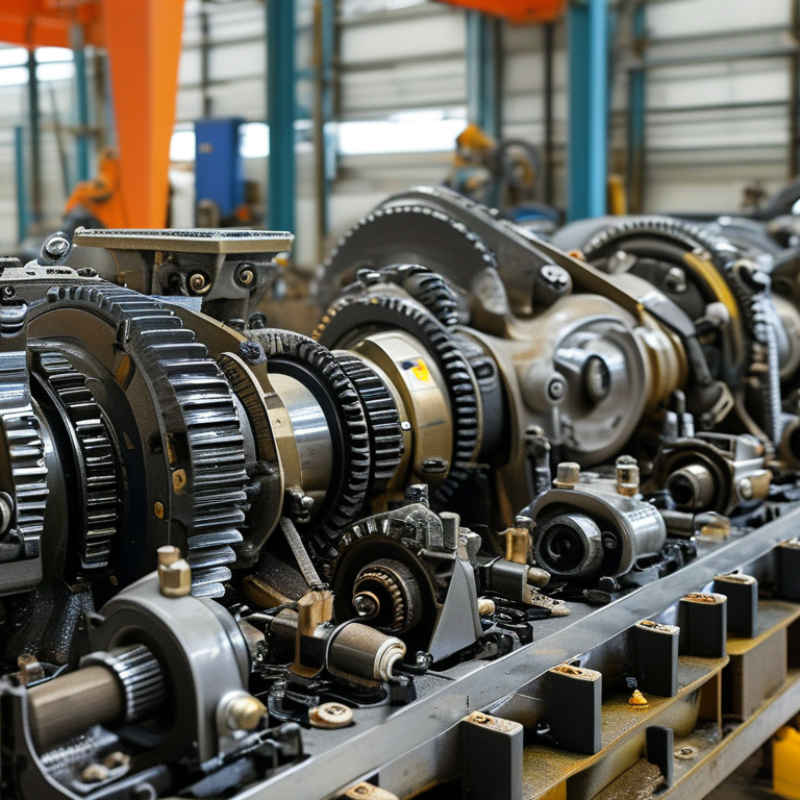
A variable speed gearbox changes a motor’s rotational speed before power reaches the machine. It usually uses gears, belts, planetary stages, or traction elements to alter the transmission ratio. The motor turns the input shaft. Internal components then adjust output speed and torque. Lower speed normally produces higher torque, although losses and design limits still matter.
Unlike a variable frequency drive, it changes speed through mechanical transmission. This can suit dusty, hot, or electrically sensitive environments. The U.S. Department of Energy reports that motor-driven systems consume more than half of industrial electricity in the United States. It also notes that speed control can reduce energy use significantly in variable-load applications. The International Energy Agency estimates that electric motor systems use about 46% of global electricity. That figure explains the growing focus on efficient transmission.
In practice, suppliers should provide ratio ranges, rated torque, efficiency curves, thermal limits, lubrication guidance, and service data. A gearbox running at 1,450 revolutions per minute may need a different ratio than one driven at 3,000. Pump and fan loads often benefit most because power demand falls sharply with reduced speed. However, savings are not automatic. Poor sizing creates heat, noise, and premature wear. Field measurements matter. I would check actual load profiles before trusting a catalogue estimate. The calculation is rarely perfect. Condition monitoring, correct alignment, and realistic maintenance intervals often decide whether a variable speed gearbox performs reliably for years.
Evaluating variable speed gearbox suppliers worldwide requires more than comparing catalog prices. Start with operating facts: motor power, output torque, speed range, duty cycle, ambient temperature, and mounting space. A reliable supplier should request these details before recommending a unit. That question shows engineering discipline. Request test data, efficiency curves, noise readings, and service-life assumptions. Vague claims are warning signs. Look for documented quality controls, traceable materials, and technicians who explain failure modes clearly. Not every polished brochure reflects field experience.
Tips: Compare at least three technically equivalent quotations. Check whether rated torque covers starting loads, not only normal operation. Ask for installation drawings, lubrication requirements, spare-part availability, and regional response times. Contact recent industrial users, if possible. Ask how the gearbox performed after months of dust, heat, or frequent speed changes. Verify certifications against your market’s requirements. A certificate alone is not proof of reliability. Clarify warranty exclusions, because assumptions often become expensive.
A responsible evaluation includes a practical trial. Run the proposed gearbox under representative load conditions. Then inspect temperature rise, vibration, backlash, and control stability. Ask the supplier what happens during overloads or missed maintenance. The answer should be specific, not comforting. Total cost includes energy use, downtime, training, shipping, and replacement parts. Some teams choose the lowest quote and regret weak support later. Still, a higher price does not guarantee better engineering. Record every promise in the purchase specification, and allow independent inspection before acceptance.
Seven leading variable speed gearbox suppliers are distinguished by practical strengths, not only catalog size. A precision planetary specialist suits robotics and compact motion systems. Its strength is high torque density and low backlash. An industrial helical supplier fits conveyors and mixers. It usually offers strong efficiency, quiet operation, and easier maintenance. A bevel-helical manufacturer serves right-angle layouts, especially in packaging and material handling. A worm-drive supplier remains attractive for low-speed applications and simple installation. Cost matters here, although efficiency can suffer.
A modular gearbox supplier helps factories standardize spare parts across multiple lines. A custom-engineering supplier performs better when shock loads, unusual shafts, or harsh temperatures complicate selection. A service-led supplier adds value through vibration checks, oil analysis, and faster field support. That difference is visible on a factory floor. The gearbox may be excellent, but delayed parts still stop production.
The U.S. Department of Energy reports that motor-driven systems use about 70% of industrial electricity in the United States. This explains the growing focus on efficient speed control and correctly sized transmissions. Recent industrial gearbox market studies also forecast steady growth through the decade, though estimates vary by application and region. Buyers should verify torque curves, thermal ratings, duty cycles, noise levels, and ISO or AGMA calculations. One weakness remains common: suppliers sometimes publish peak torque without showing continuous thermal performance. That can mislead inexperienced buyers. Supplier claims deserve testing.
Comparative capability index for seven leading supplier profiles. Scores are normalized from publicly documented product breadth, customization capability, heavy-duty suitability, efficiency focus, and international service coverage; they are not market-share or revenue figures.
Higher scores indicate stronger publicly documented capability in the relevant area. The profiles are anonymized to focus on supplier strengths rather than company or brand data.
Variable speed gearboxes are most valuable where loads change throughout the working day. In pumping systems, they adjust flow without constant throttling. In conveyors, they protect products during starts and stops. The International Energy Agency’s Energy Efficiency 2023 report states that industry accounts for about 37% of global final energy consumption. Better speed control can therefore reduce wasted mechanical and electrical energy. Heat matters.
Water treatment plants use gearboxes for mixers, aerators, and sludge-handling equipment. Mining operations require higher torque for crushers, feeders, and long conveyors. Food-processing lines need controlled motion when handling fragile bottles, trays, or packaged goods. The U.S. Department of Energy reports that motor-driven equipment represents roughly 68% of industrial electricity use in the United States. This figure supports careful gearbox selection, especially where motors run continuously.
Winders, extruders, paper machines, and HVAC systems also benefit from adjustable output speed. Engineers should check torque demand, duty cycles, ambient temperature, lubrication, and washdown exposure. A gearbox sized only for peak speed may fail under repeated shock loads. The fit is imperfect. Energy savings also depend on alignment, maintenance, and control settings, not the gearbox alone. Reports from the European Commission’s Joint Research Centre indicate that efficient motor systems require coordinated equipment, commissioning, and monitoring. In practice, operators should compare measured load profiles before choosing a supplier or gearbox configuration.
Choosing among seven variable speed gearbox suppliers worldwide starts with your machine, not a catalogue. Record motor power, output torque, speed range, duty cycle, mounting position, ambient temperature, and expected service hours. A gearbox running near a dusty conveyor needs different sealing than one inside a clean packaging room. Small details matter. Ask each supplier for a sizing calculation using your real load profile. Generic ratios can hide overheating, backlash, or poor starting performance. An experienced engineer should explain assumptions in plain language.
Supplier quality must be verifiable. Request drawings, material specifications, test procedures, warranty terms, and traceable inspection records. Check whether units are tested under load, not only visually inspected. Ask for measured noise, vibration, efficiency, and temperature rise. Independent certifications may help, but they do not replace technical evidence. Speak with two or three comparable customers, preferably those operating similar equipment. Their maintenance records can reveal more than polished sales pages. Delivery capacity also matters; confirm spare-part availability, response times, and local technical support before signing.
Compare total ownership cost, not the lowest quotation. Include installation, lubrication, alignment tools, energy use, downtime, and replacement seals. A cheaper unit may become expensive after one missed production shift. I would also test communication early. Send a difficult question and observe the reply. Does the supplier admit uncertainty, request missing data, or promise everything immediately? Honest limitations often indicate stronger engineering discipline. Still, supplier rankings are imperfect. Your application may expose weaknesses that standard references never show, so insist on a pilot test or acceptance trial when the gearbox is critical.
An anonymized comparison of common supplier profiles and typical variable-speed gearbox capabilities. Use the specifications as a screening guide and confirm the final ratings, certificates, lead time, and performance data before purchase.
| Supplier Profile | Typical Applications | Typical Motor Power | Typical Output-Speed Range | Typical Speed Ratio | Typical Efficiency | Common Documentation | Best Fit for Buyers |
|---|---|---|---|---|---|---|---|
| Precision industrial OEM | Conveyors, packaging lines, machine tools, and automated production equipment | 0.18–30 kW | 10–300 rpm, depending on the gearbox ratio and motor speed | Approx. 3:1 to 10:1 | Typically 85–95% for optimized geared systems | Dimensional drawings, performance curves, material lists, test reports, and quality certificates | High repeatability and precise speed control |
| Heavy-duty industrial supplier | Mixers, crushers, hoists, extruders, material handling, and continuous-process equipment | 7.5–250 kW | 5–150 rpm for high-torque applications | Approx. 5:1 to 20:1 | Typically 90–97% for industrial helical or planetary stages | Load calculations, thermal ratings, service-factor data, lubrication instructions, and inspection records | High torque, long duty cycles, and severe operating conditions |
| Compact automation specialist | Robotics, indexing equipment, laboratory systems, small conveyors, and electronic assembly machines | 0.05–7.5 kW | 20–600 rpm | Approx. 2:1 to 8:1 | Typically 80–94%, depending on size and transmission design | CAD files, backlash data, noise data, mounting dimensions, and interface specifications | Space-limited systems requiring fast integration |
| Hygienic-process supplier | Food processing, beverage filling, pharmaceutical production, and clean manufacturing | 0.25–45 kW | 10–300 rpm | Approx. 3:1 to 12:1 | Typically 85–95% | Ingress-protection rating, surface-finish data, food-contact declarations where applicable, cleaning guidance, and material certificates | Washdown environments and contamination-sensitive operations |
| Hazardous-area specialist | Chemical processing, oil and gas support equipment, paint systems, and combustible-dust environments | 0.37–90 kW | 10–250 rpm | Approx. 3:1 to 15:1 | Typically 85–96% | Area-classification documents, temperature-class data, conformity certificates, installation instructions, and inspection records | Projects requiring verified explosion-protection compliance |
| Custom engineering integrator | Retrofits, special machinery, test rigs, engineered skids, and non-standard mounting arrangements | 0.18–160 kW | Application-specific; commonly 5–500 rpm | Application-specific; commonly 3:1 to 20:1 | Usually 80–96%, subject to the selected transmission and operating point | Application calculations, interface drawings, prototype-test reports, risk assessments, and commissioning documents | Non-standard layouts and technically complex projects |
| High-volume export manufacturer | Standard conveyors, fans, pumps, agricultural machinery, and general-purpose industrial equipment | 0.12–75 kW | 10–300 rpm | Approx. 3:1 to 15:1 | Typically 82–95% | Datasheets, routine test reports, packing specifications, spare-parts lists, and standard warranty terms | Cost-sensitive projects using standardized models |
: It changes motor speed mechanically before power reaches the machine. Gears, belts, planetary stages, or traction elements may adjust the ratio.
The motor turns the input shaft. Internal parts alter output speed and torque. Lower speed usually creates higher torque, but losses remain.
A gearbox changes speed through mechanical transmission. This can suit dusty, hot, or electrically sensitive areas. It is not automatically better.
Pumps and fans often benefit from reduced speed. Their power demand can fall sharply. Conveyor systems may also need careful speed adjustment.
Request ratio ranges, rated torque, efficiency curves, thermal limits, lubrication instructions, and service data. Ask for measured test results.
Provide motor power, output torque, speed range, duty cycle, mounting position, temperature, and service hours. Mention dust exposure too.
Request drawings, material details, test procedures, warranty terms, and inspection records. Confirm load testing, not only visual inspection.
Include installation, lubrication, alignment tools, energy use, downtime, seals, and spare parts. A low quotation may become costly after one missed shift.
Ask for calculations using your actual load profile. Check heat, noise, backlash, starting performance, and temperature rise. Catalogue figures may mislead.
It is wise for critical equipment. Test under realistic conditions before full installation. No calculation is perfect.
A Variable Speed Gearbox is a mechanical transmission system designed to adjust output speed and torque according to changing operational requirements. By combining gears with an adjustable speed-control mechanism, it helps machines run more smoothly, improve energy efficiency, and maintain stable performance under different loads. This article explains how the system works and outlines practical methods for evaluating suppliers worldwide, including product quality, engineering capability, customization options, delivery reliability, technical support, certifications, and total operating cost.
It also presents seven leading categories of suppliers and highlights the strengths buyers should look for, such as advanced manufacturing, application expertise, flexible designs, and dependable after-sales service. Variable Speed Gearbox systems are widely used in manufacturing, material handling, packaging, conveyors, processing equipment, renewable energy, and other industrial applications. To choose the right supplier, customers should compare their machine requirements, speed range, torque capacity, installation conditions, maintenance needs, budget, and long-term service expectations before making a final decision.

Lahabra Motors