Best Electromechanical Gearbox Manufacturers in China?

Time:2026-11-03 Author:Liam
0%

China’s electromechanical manufacturing base makes it a serious place to investigate gearbox suppliers. The demand context is substantial. The International Federation of Robotics reported 541,302 industrial robot installations worldwide in 2023, with 276,288 installed in China. These figures describe robot installations, not gearbox sales. Still, they show the scale of automation equipment that can require reliable motion components.

Choosing an Electromechanical Gearbox manufacturer takes more than comparing catalogue prices. Buyers should check rated torque, speed ratio, backlash, thermal limits, and expected duty cycle. Ask for dimensional drawings, material specifications, and test records. A gearbox that looks suitable on paper may behave differently under continuous load or frequent starts. Small details matter.

China has suppliers serving applications from packaging lines to robotics and material handling. Their capabilities vary. Some focus on standard gearmotors; others engineer assemblies for specific operating conditions. The best fit depends on the application, not a broad ranking. Factory audits, sample testing, and clear warranty terms can help reduce sourcing risk. Yet even careful checks cannot remove every uncertainty. Real-world performance deserves attention. This guide will examine leading manufacturers, their product strengths, and practical questions buyers should ask before placing an order.
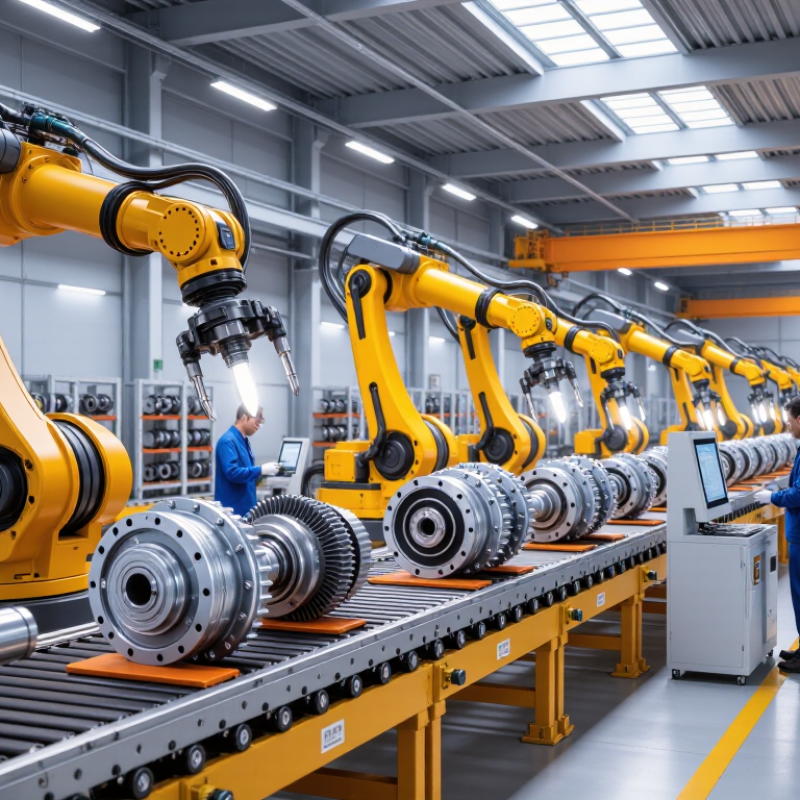
Best Electromechanical Gearbox Manufacturers in China?

Electromechanical Gearboxes: Components, Motion Conversion, and Key Ratings

An electromechanical gearbox combines an electric motor with gears, bearings, a housing, and seals. Some assemblies also include an encoder or brake. The motor supplies rotation; the geartrain changes speed and torque to suit the load. A lower output speed can provide higher torque, though efficiency losses and heat still matter. Small details count. For example, a conveyor may need steady torque at low speed, while a positioning axis may demand precise starts and stops.

Compare ratings under the conditions your machine will actually face. Check continuous torque, peak torque, input speed, gear ratio, duty cycle, and allowable temperature. Peak torque is not a safe substitute for continuous capacity. Backlash matters when repeatable positioning is required, and efficiency affects both energy use and motor sizing. Confirm mounting dimensions, shaft tolerances, and protection against dust or moisture. A rating without its test conditions is incomplete.

When assessing manufacturers in China, request dimensional drawings, material specifications, and test records for the proposed configuration. Ask how noise, temperature rise, and backlash are measured, and whether production checks match the sample. A tidy datasheet helps, but it cannot answer every application question. I would still verify fit and load assumptions with a prototype; that step can feel slow, yet skipping it often leaves costly surprises.

Gearbox Types Compared by Ratio, Torque, Efficiency, and Backlash

When comparing electromechanical gearboxes from Chinese suppliers, compare the ratio, output torque, efficiency, and backlash at the same operating conditions. A 5:1 helical stage often delivers about 97–99% efficiency, while worm-drive estimates commonly range from 50–90%, depending on ratio, lubrication, and load. These are typical engineering ranges, not guaranteed test results. AGMA 6001-F19 provides a framework for enclosed-drive selection; ask suppliers for efficiency curves and test conditions, not one headline figure.

Planetary gearboxes offer high torque density in a compact housing, with single-stage ratios commonly around 3:1–10:1. Worm units can achieve larger reductions in one stage, but may generate more heat and lose more power. Backlash varies with design and adjustment: precision planetary units may specify a few arcminutes, while general-purpose units can allow substantially more. ISO 1328-1:2013 covers gear accuracy classes, but does not guarantee assembled gearbox backlash. Request the measured value at the output shaft. Small detail. A ratio alone cannot predict torque capacity; duty cycle, shock loads, and thermal limits matter. Supplier data can be incomplete, so verify figures against your actual motor speed and load.

Cylindrical Gear Accuracy under ISO 1328-1:2013

Cylindrical gear accuracy should be measured, not described with vague terms such as “high precision.” ISO 1328-1:2013 defines 11 accuracy classes, from class 1, the tightest, to class 11. The required class depends on gear geometry and operating conditions; a lower class number is not automatically the best choice.

Small differences matter. For a gearbox manufacturer, inspection reports should identify profile, helix, and pitch deviations, alongside the gear’s module and reference diameter. Without those details, a class label tells only part of the story.

When evaluating a Chinese supplier, request measurement results for the actual gear set, not just a sample certificate. Ask how the parts were checked, what calibrated equipment was used, and whether the stated class applies to every gear or selected samples. ISO’s tolerance limits vary with dimensions, so comparing class numbers alone can mislead. A clear report connects each measured deviation to the applicable limit.

Not always.

Even careful inspection cannot guarantee quiet operation if assembly, lubrication, or housing alignment is poor. That limitation deserves attention, and should be discussed before production begins.

Gearmotor Efficiency Classes IE3 and IE4 under IEC 60034-30-1

IEC 60034-30-1 assigns IE efficiency classes to certain motors; it does not rate the complete gearbox. This distinction matters. An IE3 or IE4 label describes motor efficiency under defined test conditions, not the energy lost through gears, seals, or bearings. When comparing Chinese electromechanical gearboxes, check which component the stated class applies to.

Ask for the motor’s test documentation and confirm its rated power, speed, frequency, and operating conditions. Then assess the assembled gearmotor at the output shaft. A motor may meet IE4, yet the complete drive can deliver less useful power after gearbox losses. Small details count: a hot housing, an undersized unit, or frequent starts can affect real-world performance.

IE4 may reduce energy use in applications with long operating hours and steady loads. The payback is less certain for intermittent duty or poorly matched gearing. I would not choose by class alone. Compare expected load, duty cycle, speed control, and maintenance needs, and request measured data for the configuration being quoted. Supplier figures can be useful, but they may not represent your exact installation.

Best Electromechanical Gearbox Manufacturers in China? - Gearmotor Efficiency Classes IE3 and IE4 under IEC 60034-30-1
Gearbox Configuration Typical Gear Type Common Application Motor Efficiency Class IEC 60034-30-1 Relevance What to Verify When Comparing Suppliers
Inline helical gearmotor Helical gears with parallel shafts Conveyors, mixers, packaging machinery, and material handling IE3 or IE4 may be specified for the motor, subject to motor design and applicable requirements. The standard classifies the efficiency of covered electric motors; it does not assign an efficiency class to the gearbox. Request the motor efficiency documentation and the gearbox’s separately stated ratio, rated torque, service factor, and efficiency data.
Right-angle helical-bevel gearmotor Helical-bevel gears with intersecting shafts Conveyors, process equipment, and installations with limited space IE3 or IE4 motor options may be available, depending on the motor configuration. Check that any IE class claim applies to the motor itself and matches its rated operating conditions. Compare output torque, mounting position, shaft arrangement, backlash where relevant, and the stated gearbox efficiency.
Worm gearmotor Worm and worm wheel Compact drives, low-speed machinery, and applications needing a large reduction in one stage An IE3 or IE4 motor can be paired with a worm gearbox; the motor class does not describe the gearbox’s efficiency. IEC 60034-30-1 concerns motor efficiency classification, not the efficiency of the worm transmission or complete geared drive. Check gearbox thermal limits, permissible input power, output torque, lubrication requirements, and gearbox efficiency at the intended operating point.
Planetary gearmotor Planetary gear train Robotics, indexing equipment, and drives requiring compact torque transmission IE3 or IE4 classification may apply to a compatible motor, but should be confirmed for the exact motor model. Motor classification and gearbox performance are separate specifications; request evidence for each relevant claim. Compare rated and peak torque, reduction ratio, backlash, radial and axial load limits, and the supplier’s test conditions.
Parallel-shaft helical gearmotor Helical gears with parallel input and output shafts Industrial conveyors, elevators, and heavy-duty process drives IE3 or IE4 options depend on the motor’s design, power rating, pole count, and applicable market rules. Use the motor’s rating plate and supporting documentation to verify its stated efficiency class. Confirm output-shaft loads, service factor, thermal rating, mounting arrangement, and gearbox efficiency for the specified duty.
Important: IEC 60034-30-1 defines efficiency classes for covered electric motors. It does not rate gearbox efficiency or provide an IE class for a complete gearmotor. Confirm the standard edition, motor scope, rated conditions, and local regulatory requirements before comparing IE3 or IE4 claims.

Evaluating Chinese Manufacturers by Testing, Certification, and Applications

Evaluating Chinese electromechanical gearbox manufacturers means checking how test evidence matches the unit you plan to buy. Ask for load, efficiency, noise, temperature-rise, and endurance results for the same gearbox size and configuration. A useful report identifies test conditions, instruments, sample count, and acceptance limits. Look for backlash measurements and vibration readings, not just a statement that the product passed inspection. Confirm that certificates cover the relevant product range and manufacturing site; a certificate alone does not prove every model performs equally well. Paper is not performance.

Application details matter. A conveyor operating for long shifts needs different checks from a compact actuator used intermittently. Share the required torque, speed, duty cycle, mounting position, ambient temperature, and expected service life. Then compare the proposed gearbox’s ratings with those conditions, including its lubrication and sealing arrangements. Request a sample or documented inspection records before committing to a large order. A short trial can reveal heat buildup or unexpected noise that a specification sheet misses. There is a practical limitation here: factory tests may not reproduce your exact installation, so field monitoring still matters. I would also question unusually broad performance claims until the test method is clear.

FAQS

What does an electromechanical gearbox do?

It combines a motor with gears, bearings, a housing, and seals. Some assemblies include an encoder or brake. Gears trade speed for torque. Not free power; losses create heat.

Which ratings should I check before selecting one?

Check continuous torque, peak torque, input speed, gear ratio, duty cycle, and allowable temperature. Peak torque does not define continuous capacity. Compare ratings under your machine’s actual conditions.

How do planetary and worm gearboxes differ?

Planetary units offer high torque in a compact housing, often with single-stage ratios around 3:1 to 10:1. Worm units can provide larger reductions in one stage, but may run hotter and lose more power.

Why does backlash matter?

Backlash is movement between gear teeth before the output responds. It matters for repeatable positioning. Ask for the measured value at the output shaft. A gear accuracy class alone does not guarantee assembled backlash.

Does an IE3 or IE4 rating describe the complete gearmotor?

No. It describes the motor’s efficiency under defined test conditions. Gear losses, seals, and bearings affect the complete drive. A hot housing tells part of the story.

How should I compare efficiency figures?

Compare figures measured under the same operating conditions. Request efficiency curves and test details, not one headline number. The quoted result may not match your installation.

What information should I request from a supplier?

Ask for dimensional drawings, material specifications, and test records for the proposed configuration. Check how noise, temperature rise, and backlash are measured. Confirm production checks match the sample.

Is a prototype worth the extra time?

It can verify mounting dimensions, shaft fit, and load assumptions. A conveyor may need steady torque at low speed. I may be too cautious, but skipping a fit check can bring costly surprises.

Conclusion

An Electromechanical Gearbox combines an electric motor with a gear train to convert electrical input into controlled mechanical motion. Its performance depends on components such as gears, shafts, bearings, and the housing, as well as the selected ratio and operating conditions. Comparing gearbox types means balancing torque, speed reduction, efficiency, and backlash against the needs of the intended application. Cylindrical gear accuracy can be assessed using the accuracy framework in ISO 1328-1:2013, while gearmotor efficiency classes IE3 and IE4 are defined under IEC 60034-30-1.

When evaluating Chinese manufacturers, buyers should look beyond product specifications and review relevant testing methods, certification documentation, quality-control practices, and experience with comparable applications. Clear information about rated performance, accuracy, efficiency, and operating limits can make comparisons more meaningful. Matching these factors to the required load, motion control, and duty cycle helps identify a suitable manufacturer and gearbox without relying on any single rating alone.

Liam

Liam

Liam is a dedicated marketing professional with a profound expertise in the industry, where he excels at highlighting the unique advantages of our core products. With a keen understanding of market trends and consumer needs, Liam frequently updates our company’s professional blog, providing......